DIY Fun With Kids: Creating Toys and Figures With a 3D Pen

3d pen printed spider A

Featuring a glow-in-the-dark spooky spider

If you’ve ever held a 3D pen and wondered what kinds of projects you could create with kids, here’s the good news: it’s easier than you think. A 3D pen is basically a drawing tool that lets you build upward, outward, and in three dimensions—perfect for young imaginations.

Today’s featured project is a great example of how simple and fun it can be. We created a scary-looking spider with a touch of glowing magic, and it’s a project that anyone can make, even beginners.

3d pen printed spider B
3d pen printed spider

Why 3D Pens Are Great for Kids’ DIY Projects

A 3D pen is accessible, quick to set up, and instantly rewarding. Kids get to see their creations take shape right in front of them, which keeps them engaged and excited. There’s no waiting for a print to finish, no complicated software, and mistakes can be turned into new ideas on the fly.

It also encourages hands-on creativity, problem-solving, and the joy of experimenting with shapes and textures.


The Glow-in-the-Dark Spider Project

This spider looks surprisingly realistic, but the process behind it is straightforward. You only need a 3D pen, black filament, a ping pong ball, glow-in-the-dark paint, and a few small beads or drops of filament for the eyes.

1. Shape the Legs

Start by drawing eight legs using the 3D pen. Kids can help outline wavy or curved shapes on a piece of parchment paper or a work mat. Perfect symmetry isn’t important—natural spiders aren’t perfectly consistent either.

2. Build the Head and Upper Body

Use the 3D pen to draw a small rounded head and a slightly larger front body section. These can be hollow or filled in, depending on how sturdy you want the figure to be.

3. Form the Abdomen Using a Ping Pong Ball

This is where the project becomes especially fun. Take a ping pong ball and begin coating it with black filament from the 3D pen. Once it’s mostly covered, paint it with glow-in-the-dark paint. The paint charges in sunlight or under indoor lights, making the spider glow at night.

4. Assemble the Spider

Attach the legs one by one to the body, warming the filament slightly so it bonds firmly. Kids love this step because the spider starts to take shape instantly.

5. Add the Eyes

Use tiny beads or small dots of cooled filament to create the spider’s eyes. You can add as many as you like—real spiders often have eight.


The Best Part

Once the paint is dry, turn off the lights and watch the abdomen glow. Kids are always delighted to see their creation come alive with light.

This project often inspires more ideas: glowing insects, creative creatures, robots, or seasonal decorations. With a 3D pen, the possibilities are almost endless.

Working together on a project like this is not only creative but also a great bonding activity. You don’t need special skills—just curiosity and the willingness to play with shapes and ideas.

Just do it and create!

Fritto Misto: The Story Behind Italy’s Crispy Coastal Classic

There are few dishes in Italian cuisine that capture the spirit of the coastline as perfectly as Fritto Misto. Simple, golden, and irresistibly crisp, it’s a dish that appears everywhere—from seaside shacks to Michelin-starred restaurants—yet its roots are humble.

The Story Behind Fritto Misto

“Fritto misto” simply means “mixed fry,” and depending on where you stand in Italy, that can mean very different things.

Born by the Sea

Along Italy’s Adriatic and Ligurian coasts, fishermen would fry up whatever the day’s catch offered—tiny fish, shrimp, calamari, or even small crabs. It was food meant to be eaten hot, quickly, and with your hands. Street vendors would serve it in paper cones (“cuoppo”), letting the sea breeze and sizzling heat mingle together in perfect harmony.

A Dish of Resourcefulness

In northern regions like Piemont or Veneto, the landlocked version appears: Fritto Misto alla Piemontese, featuring fried meats, vegetables, and even sweet fritters. It was born out of necessity and creativity—using every scrap of food available and turning it into a golden celebration.

Why We Still Love It Today

Because it’s everything we crave:

  • Crispy but light
  • Packed with flavor
  • Easily shared
  • A perfect example of cucina povera becoming timeless cuisine

Authentic Fritto Misto di Mare Recipe

Serves: 2–3

Prep Time: 20 minutes

Cook Time: 10 minutes


Ingredients

Seafood

  • 200 g calamari, cleaned and sliced into rings
  • 200 g small shrimp (peeled or unpeeled—your choice)
  • 150 g small fish (anchovies, smelt, or whatever is fresh)

Coating

  • 1 cup fine semolina flour or a mix of semolina + all-purpose flour
  • A pinch of sea salt
  • Black pepper (optional)

For Frying

  • Neutral oil with high smoke point (sunflower, peanut, or light olive oil)

To Serve

  • Lemon wedges
  • Sea salt flakes
  • Fresh parsley (optional)

Instructions

1. Prepare the Seafood

Pat the seafood dry thoroughly—moisture is the enemy of crispiness.
If using whole small fish, keep them intact but remove any large bones if needed.

2. Heat the Oil

Pour about 2 inches of oil into a deep pan.
Heat to 180°C / 350°F.
(If you don’t have a thermometer, drop in a pinch of flour—if it sizzles, it’s ready.)

3. Coat Lightly

In a shallow bowl, mix the semolina and flour.
Toss the seafood in the mixture until lightly coated. Shake off the excess.

4. Fry in Batches

Add a handful of seafood at a time.
Crowding lowers the oil temperature and results in soggy fry.
Cook for 2–3 minutes, until pale golden and crisp.

5. Drain and Season

Transfer to a plate lined with paper towels.
Immediately salt while still hot.

6. Serve

Pile everything onto a platter.
Add lemon wedges and a sprinkle of parsley.
Eat right away—it waits for no one.


Tips for the Perfect Fritto Misto

  • Use semolina for extra crunch.
  • Keep seafood cold until the moment it’s fried.
  • Eat while hot—freshness is key.
  • Try variations: zucchini strips, sage leaves, or even thinly sliced fennel.

When Data Becomes Light: The Digital Alchemy of Daniel Canogar

In a world saturated with screens, streams, and torrents of information, Daniel Canogar stands out as a magician of light — a creator who doesn’t just show data, but transmutes it into immersive visual poetry and moving sculptures. Through his video installations and generative artworks, Canogar transforms raw flows of digital information into luminous, breathing compositions, inviting us to experience the intangible architecture of our data-driven lives.

Daniel Canogar

From Photography to Fluid Data — A Journey Through Media

Canogar was born in Madrid in 1964 and trained in photography, receiving a master’s degree from New York University’s International Center of Photography. https://www.mirabaud.com/en/contemporary-art/artists/artist/daniel-canogar

Yet, very early in his career he grew curious about the “projected image” — not just static pictures, but light, motion, space, and time. https://www.danielcanogar.com/bio

Over the decades, his practice evolved beyond photography: he experimented with fiber optics, video projections, recycled electronics, and — now — real-time data streams. https://www.meer.com/en/60589-daniel-canogar

For Canogar, objects like old VHS tapes, hard drives, obsolete electronics aren’t mere trash — they are archeological artifacts of a vanished analog era. By projecting onto them, he resurrects forgotten memories and highlights the impermanence of technology and memory. https://www.meer.com/en/60589-daniel-canogar


Data as Palette: Translating Information Into Art

One of the most distinctive traits of Canogar’s work is how he transforms data itself — from financial markets to news feeds, from social attention metrics to historical artworks — into rich, moving visual experiences.

What makes these works different from mere data visualization — charts, diagrams, dashboards — is that Canogar doesn’t aim to clarify. Instead, he embraces abstraction, ambiguity, emotion: the goal is not to inform, but to evoke. As one observer noted: “the palette of these artworks is not painting, but rather data.” https://www.artsy.net/article/mark-moore-fine-art-mirrors-data-works-daniel-canogar


Light, Memory, and the Fragility of Digital Existence

Underneath the technical brilliance and hypnotic visuals lies a deeper preoccupation: memory, impermanence, and what gets lost when technology evolves.

By projecting onto discarded electronics — DVDs, hard disks, cables — Canogar taps into a collective nostalgia, a memory of personal and shared times stored in these now-forgotten objects. https://www.meer.com/en/60589-daniel-canogar

He sees digital media not as a final frontier, but a sediment — layers of memories, data, context — that accumulate, shift, vanish. His installations often feel like attempts to hold on to that fluid past, to give shape and light to what otherwise remains intangible. https://www.thelightobserver.com/daniel-canogar

As he once said: after the magic of discovering the photographic darkroom as a teenager, “I realized I’m always trying to recreate that magical enchantment … now through algorithms, huge projectors, LED screens.” https://www.niio.com/blog/daniel-canogar-im-trying-to-find-inner-peace-in-this-world-of-excess/


Public Space as Canvas: Blurring Boundaries Between Digital & Physical

Another defining feature of Canogar’s work is its site-specific and often public-space dimension. He doesn’t confine his art to galleries — he spills it into urban spaces, airports, museums, and monumental façades. https://zkm.de/en/person/daniel-canogar

Whether it’s a flexible LED sculpture curving through the atrium of a bank headquarters, or projection animations crawling up the walls of iconic buildings — his art challenges the viewer’s concept of where art belongs. https://www.mirabaud.com/en/contemporary-art/artists/artist/daniel-canogar

In doing so, he asks: how does the digital age reshape our public spaces? How does the constant flow of information infiltrate our shared physical environment? Can we find a new kind of public sphere, where data and memory become visible and collective? https://linkedspheres.art/daniel-canogar


Why Daniel Canogar Matters — And What His Work Reflects

In an era where our lives are increasingly mediated by screens, algorithms, feeds, and streams — almost always unseen layers of code — Canogar’s work is important because it makes the invisible visible.

  • He doesn’t just display data — he feels it, sculpts it, breathes light into it.
  • He reminds us that behind every “data point” lies human experience, memory, culture.
  • He connects analog pasts with digital futures — reclaiming discarded technology as vessels of collective memory.
  • He questions what it means to be human in a world where identity, art, history, and memory are increasingly bound up with data.

To encounter a Canogar installation is to confront the vastness of our digital milieu — but to do so as poetry, not panic.


Final Thought: Data Is Not Just Information — It’s Living Light

If data is the new oil, then Daniel Canogar is one of the world’s most graceful and mindful refineries. With sensitivity, imagination, and technological mastery, he turns cold, abstract 1s and 0s into warm, pulsing lights; noisy, chaotic streams into meditative mosaics; fleeting online moments into lasting visual memories.

In his hands, data becomes not a commodity — but a canvas. A reminder that our digital lives, for all their intangibility, leave traces: light and shadows on walls, memories flickering in LED glow, the ghost of old hard drives dancing again.

And maybe that’s what we need now: not another chart or graph — but art.

From Earth to Orbit: How Decathlon Is Redefining Design With Daring, Awe-Charged, and Frontier-Born Space-Age Thinking.

When “Sport Design” Meets Space: Decathlon’s Bold New Chapter

When you think of EuroSuit, you might expect bulky, technical gear forged in aerospace labs. Instead — it’s coming from Decathlon, the same brand behind everyday sportswear, hiking gear, and budget-friendly sporting accessories. And that’s what makes the story so remarkable. https://www.euronews.com/next/2025/11/17/this-space-suit-designed-by-a-french-sportswear-brand-will-be-tested-in-orbit-next-year

Decathlon Eurosuit (all credits with Decathlon)

From Tracksuit Shelves to Spacecraft Modules

Decathlon’s Advanced Innovation division — known for optimizing comfort, mobility, and practicality in sports gear — is now applying that design philosophy to human spaceflight. In collaboration with CNES (the French space agency), Spartan Space (a space-tech provider), and MEDES (Institute for Space Medicine and Physiology), Decathlon has developed EuroSuit — a next-generation intra-vehicular activity (IVA) suit. https://www.decathlon-united.media/pressfiles/eurosuit-decathlon_intra-vehicular-space-suit-prototype

The goal: a space suit astronauts can don or doff unassisted, under two minutes — a first in the industry. This is a potential game-changer for launch and landing phases, where speed and safety are crucial. https://www.euronews.com/next/2025/11/17/this-space-suit-designed-by-a-french-sportswear-brand-will-be-tested-in-orbit-next-year


Designing for Humans — Not Just Machines

What sets EuroSuit apart is the human-centered design. Decathlon’s textile & ergonomics experience translates to features such as:

This is a clear example of how good design — from sport to space — can centre around the human body, not just technological demands.


What It Means for Design, Space & Everyday Innovation

  • Design thinking crosses industries. Decathlon’s pivot shows how principles from consumer-facing goods (comfort, ergonomics, usability) are increasingly relevant in high-tech, high-stakes fields like aerospace.
  • Human comfort + safety matters. For the first time, a major space-suit prototype combines rigorous astronaut requirements with the kind of user-centric design we expect in everyday clothing.
  • Accessibility and democratization. If EuroSuit succeeds, it may help democratize space travel and lower the barrier for designing crew gear — meaning more innovation, faster iteration, and perhaps more European autonomy in human spaceflight.

Looking Forward

EuroSuit’s first in-orbit test is slated for 2026 aboard the International Space Station (ISS), during the mission of Sophie Adenot. She’ll assess how the suit performs in microgravity: donning/doffing, mobility, handling tools, and interacting with station hardware. https://www.decathlon-united.media/pressfiles/eurosuit-decathlon_intra-vehicular-space-suit-prototype

If successful, this could mark a turning point — where space-grade protective gear meets human-centric design, and a sportswear company becomes part of the space-exploration story.


For More Info

See the official press release and background on the EuroSuit project here:
https://www.decathlon-united.media/pressfiles/eurosuit-decathlon_intra-vehicular-space-suit-prototype

Decathlon Eurosuit (all credits with Decathlon)

The Charm of the Swabian Dinnete

Swabian Dinette

There are dishes that feed us, and dishes that connect us — and the Dinnete is unmistakably the latter. This rustic Swabian flatbread, with its crisp edges, creamy topping, and comforting aroma, is woven into the everyday life and heritage of southern Germany. What began as a simple, practical way to use up bread dough has become a culinary symbol of warmth, family, and tradition.

The Dinnete is the kind of food that doesn’t need a grand presentation. It’s the food you bake on market days, the treat you look forward to at village festivals, and the dish that transports you instantly back to a grandmother’s kitchen with its wood-fired oven and slow-rising dough. Its charm lies in its simplicity — a handcrafted dough, a topping of cream, onions, bacon, or potatoes, and the gentle heat of a hot oven turning it into something deeply satisfying.

Whether you’re tasting it for the first time or rediscovering it from childhood memories, the Dinnete reminds us of the beauty of traditional cooking: humble ingredients, honest flavors, and a dish meant to be shared.

Swabian Dinette
Swabian Dinette

A Short History of the Dinnete

The Dinnete (also spelled Dinnete, Dinnele, Dünnele, or Dinette depending on the region) originates from Swabia, a cultural region in southwestern Germany covering parts of Baden-Württemberg and Bavaria. Its roots reach back to centuries-old baking traditions, when families baked bread just once a week.

Before placing the large loaves into the wood-fired oven, bakers tested the oven temperature by baking small pieces of dough topped with cream, onions, or potatoes. These “test breads” soon became beloved snacks of their own — the early ancestors of today’s Dinnete.

Over time, the dish spread across rural villages and market towns, especially in regions like the Swabian Alb, Oberschwaben, and the Allgäu. Each area developed its own variation in shape, topping, and name. Market stalls and bakeries started selling Dinnete on festival days and weekly markets, turning it into a true regional specialty.

Today, the Dinnete continues to be a highlight at Swabian Christmas markets, village fairs, and harvest festivals, and it’s increasingly appreciated in home kitchens across Germany and beyond. Despite modern adaptations, the essence of the dish remains unchanged: handmade, hearty, and deeply rooted in tradition.


Classic Swabian Dinnete Recipe

(Yields 4 Dinnete – ideal for 4–6 people)

Ingredients

For the dough:

  • 300 g wheat flour (Type 550 recommended)
  • 150 g spelt flour (optional, for a nutty flavor)
  • 250–300 ml lukewarm water
  • 21 g fresh yeast (or ½ packet dry yeast)
  • 1 tsp sugar
  • 1 tsp salt
  • 1 tbsp olive oil

For the classic savory topping:

  • 200–250 g sour cream or crème fraîche
  • 1–2 onions, sliced into thin rings
  • 150–200 g smoked bacon cubes (can substitute pancetta)
  • Optional: 100–150 g grated cheese (Emmental, Bergkäse, or similar)
  • Salt & pepper
  • Optional spices: pinch of nutmeg, caraway seeds

Instructions

1. Prepare the dough

In a large bowl, combine the flours and salt. Dissolve the yeast and sugar in about 100 ml of the lukewarm water, then pour the mixture into a well in the center of the flour. Add the remaining water and olive oil, then knead into a smooth, elastic dough.
Cover and let it rise for about 1 hour, or until doubled in size.

2. Divide and shape

Divide the dough into 4 equal portions and shape them into balls. Let them rest for 10 minutes, then roll each piece into a thin oval or round base, about 3–5 mm thick.

3. Preheat the oven

Preheat your oven to 230–250°C (445–480°F).
For the crispiest result, use a preheated pizza stone or baking steel.

4. Add the toppings

Spread a thin layer of sour cream or crème fraîche over each dough base.
Top with onion rings, bacon cubes, and optional cheese.
Season with salt, pepper, and a hint of nutmeg or caraway if desired.

5. Bake

Bake each Dinnete for 12–15 minutes, or until the edges are crisp and golden and the toppings are lightly caramelized.

6. Serve hot

Dinnete tastes best straight from the oven. Serve warm as a snack, light dinner, or sharing platter with friends and family.


Optional Variations

  • Potato Dinnete (creamy, hearty, traditional)
  • Cheese & Herb Dinnete
  • Vegetarian Onion & Chive Dinnete
  • Sweet Apple & Cinnamon Dinnete

Rainbow Snack Plate for Kids

Breakfast plate for kids

A tasty, healthy, and super fun breakfast you can help make!

Inspiration Behind the Rainbow snack

This colorful snack plate is inspired by the idea that food can be fun, beautiful, and exciting — just like a little piece of art you can eat! When kids see bright colors and playful shapes, their eyes tell their brain:
“Wow! This looks yummy!”
We call that eye-yummyness — when a dish tastes good before you even take a bite.


Why Colors, Shapes & Textures Matter for Kids

1. Colors make food more inviting

Kids are naturally drawn to bright, cheerful colors. Vibrant orange persimmon, green kiwi, and creamy white cheese help children feel curious and excited. When food looks friendly, kids are more likely to try new flavors.

2. Fun shapes help kids explore

Cutting fruit into zig-zags, tiles, or stacking cubes gives food a playful twist. Shapes turn eating into a mini adventure — “What will this piece taste like?” — helping picky eaters feel more open.

3. Different textures teach kids variety

Soft kiwi, juicy persimmon, smooth cheese, and chewy salami create a little texture journey. This helps children learn how different foods feel, which builds confidence with new foods.

4. Eye-yummyness boosts healthy eating

When a plate looks exciting, kids feel proud and happy. This positive feeling makes them want to eat more fresh fruits and nutritious foods — without pressure or fuss.

5. Creative food sparks imagination

Arranging food like a pattern, creature, vehicle, or landscape inspires creativity. Kids begin to see meals as something they can build and help prepare — great for motor skills, curiosity, and independence.


A Simple Way to Say It to Kids

“Your eyes help your tummy!
When food is colorful, funny-shaped, and pretty, your eyes say ‘YUM!’
That makes your tummy excited to taste it!”

Ingredients

  • 1 ripe persimmon (or mango/peach as an alternative)
  • 2 kiwis
  • 4 slices of kid-friendly salami or turkey slices
  • 1 piece of cream cheese (or cheese cube)
  • A few thin slices of cucumber for decoration

Tools You Need

  • A small kid-safe knife
  • A plate
  • An adult helper!

How to Make It

1. Slice the Fruit

  • Peel the kiwis and cut them into little zig-zag or straight slices.
  • Slice the persimmon into thin orange “tiles.”
    (This makes the plate look like a rainbow!)

2. Build the Shape

  • Put the kiwi slices at the top and bottom of the plate.
  • Lay the persimmon slices in a row across the middle, like a bright orange bridge.

3. Add the Salami Corners

  • Fold each salami slice and place one near each kiwi section so it looks balanced and fun.

4. Place the Cheese

  • Put a cube or slice of cream cheese right in the middle.

5. Make a Cute Decoration

  • Add some tiny cucumber slices on top of the cheese—like a little hat or flower! ?

Time to Eat!

Your snack plate is ready!
It’s colorful, fresh, sweet, salty, and creamy all in one. Perfect for breakfast or a fun afternoon snack.

The taste of a strawberry in the morning

How does a strawberry taste? This is the "taste" of it in a scribble.

A former boss once asked me to find a mood picture that reflects the taste of a strawberry on a Sunday morning. At first, it sounded like an impossible task—how could an image ever capture something so specific, so sensory, so delicately fleeting? But that question stayed with me. It taught me that creativity often lives in the spaces where our senses overlap, in the places where flavours become colours, where textures become emotions, and where the quiet of a Sunday morning becomes a shade of light.

To put words into pictures and pictures into words is to translate experience. It’s to turn the sweetness of a strawberry into a warm blush of red, the softness of its texture into a gentle glow, the calm of a slow morning into a muted horizon. It’s to let the imagination wander until a feeling finds its form.

And sometimes—pictures don’t need words at all.
Sometimes the right image speaks its own quiet truth. It invites the viewer in, stirs a memory, unlocks a forgotten emotion. It fills the silence without ever raising its voice.

That single request taught me to look differently. To listen to colours, to taste ideas, to let intuition guide creation. And perhaps that’s what art, design, and storytelling have in common: the courage to let a moment become something more, something that resonates beyond explanation.

Sausage Crabs — The Cutest Puff Pastry Snack You’ll Ever Make

Wiener sausage crabs in puff pastory.

Looking for a fun, delicious, and kid-friendly kitchen project? These Sausage Crabs are the perfect mix of playful creativity and savoury comfort food.
They’re easy to make, great for cooking with children, and guaranteed to bring smiles to the table!

Crispy puff pastry, melty cheese, buttery flavour, and the adorable “crab legs” made from sliced Wiener sausages — this recipe is as tasty as it is entertaining.

Crab eating our puff pastory crab. No real crab was harmed!
So delicious, even real crabs can´t resist.

Ingredients (makes 6–8 Sausage Crabs)

  • 3–4 Wiener sausages (hot dog style)
  • 1 roll of puff pastry
  • Slices of cheese (Gouda, Cheddar or Emmental work great)
  • 1 egg yolk
  • 2 tbsp milk
  • Black sesame seeds for topping
  • Optional: Ketchup, mustard or dips

How to Make Sausage Crabs

1. Prepare the “crab legs”

Cut each Wiener sausage into 3 pieces.
Then slice each end lengthwise (about 4 tiny cuts per end).
When heated, the ends will curl outward — creating the perfect crab-like legs.

2. Wrap with cheese & puff pastry

Cut the puff pastry into small rectangles.
Place a thin slice of cheese in the middle.
Lay your sausage piece on top and wrap the pastry around the center, leaving the sliced ends sticking out like legs.

3. Make a golden glaze

Whisk together:

  • 1 egg yolk
  • 2 tablespoons milk
    Brush this mixture over the puff pastry for that beautiful golden shine.

4. Add the finishing touch

Sprinkle black sesame seeds on top.
They add flavour — and make the little crabs look extra adorable.

5. Bake

Place your crabs on a baking sheet lined with parchment.
Bake at 200°C (390°F) for 15–20 minutes, until the pastry is puffed and golden, and the crab legs have curled.


Tips for Cooking with Kids

  • Let kids cut the pastry and place the cheese.
  • They love brushing the shiny egg glaze!
  • Watching the “legs” curl in the oven is pure kitchen magic.

This recipe encourages creativity, fine motor skills, and kitchen confidence — all while having fun.


Serve & Enjoy

Your Sausage Crabs are ready to serve!
Perfect for:

  • Party snacks
  • Kids’ lunch plates
  • Creative cooking afternoons
  • Fun family weekend meals

They’re delicious warm with mustard, ketchup, or a simple yogurt dip.

Nowhere — Europe’s Burning-Man Spirit in the Spanish Desert

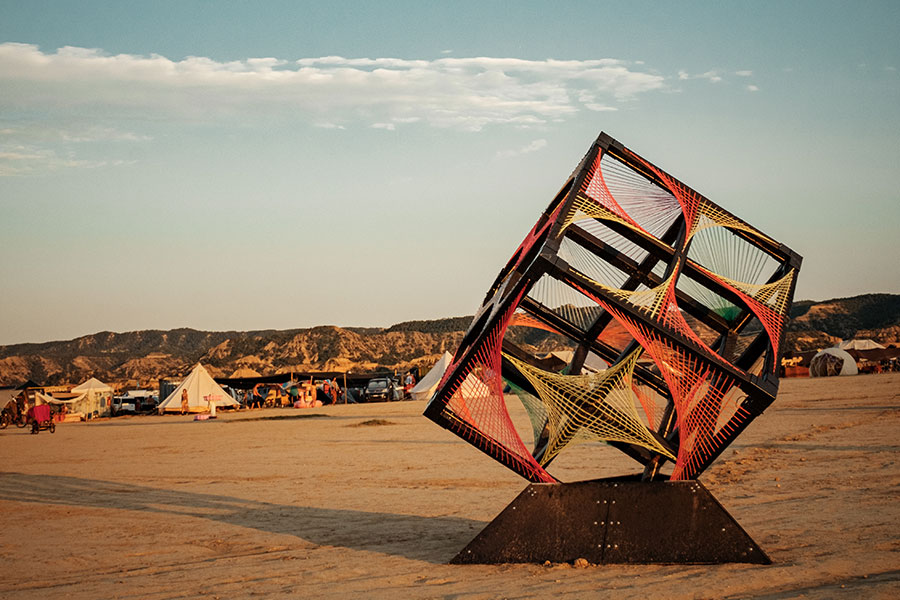
https://www.goingnowhere.org/wp-content/uploads/2023/11/nowhere-2023-19.jpg
Art cube in the desert of Spain

If you’re drawn to the creativity, freedom, and community of Burning Man, Nowhere in Spain is Europe’s closest equivalent. Held each July in the rugged Monegros Desert of Aragón, Nowhere is a week-long experiment in art, participation, and radical self-expression — entirely built by the people who attend.

When & Where

There are no stages, no commerce, and no spectators — everyone participates. Camps (“barrios”), workshops, interactive art, spontaneous performances, and temporary desert living create a shared community that vanishes without a trace.


What to Pack for Nowhere (Essential Guide)

The Monegros Desert is beautiful — and extreme. Prepare well, and you’ll love it.

Survival Essentials

  • 6–7 liters of water per person per day (drinking + cooking + washing)
  • Shade structure (tarps, poles, or a desert-ready tent)
  • Strong sunscreen + lip balm
  • Hat, sunglasses, scarf or bandana
  • Electrolytes (the heat is intense)

Camping Gear

  • Sturdy tent (stakes + extra rope — winds can be strong)
  • Sleeping mat + warm sleeping bag (cold nights!)
  • Headlamp with extra batteries
  • Trash bags (leave no trace)

Food & Cooking

  • Meals for the entire stay (no shops, no vendors)
  • Small gas stove or cold-food setup
  • Reusable cup, bowl, cutlery

Clothing

  • Light, breathable clothes for daytime
  • Warm layers for nights
  • Dust-protection items (goggles are helpful)
  • Fun outfits for self-expression

Creative & Community Items

  • Gifts (small, meaningful, non-moopy)
  • Art materials, costumes, music gear
  • Anything that contributes to the community or your barrio

Practical Extras

  • First-aid kit
  • Power bank or solar charger
  • Wet wipes / minimal washing supplies
  • Earplugs
  • Identification + event ticket

Why Go?

Because Nowhere isn’t a festival — it’s a temporary desert community where you help build the experience. No sponsors, no ads, no spectators. Just creativity, connection, art, and self-reliance under the Spanish sun.

If you’re looking for an alternative gathering that feels raw, real, and full of possibility, Nowhere might be your next unforgettable adventure.

What is “Food Printing” — in 2025

“Food printing” (often via 3D food printing / “3D-Lebensmitteldruck”) refers to using additive-manufacturing principles — similar to 3D printing — to produce edible items. Instead of plastic or metal, the “ink” can be dough, purée, chocolate, plant-protein paste, or mixtures of edible ingredients. https://en.wikipedia.org/wiki/3D_food_printing

Modern food printers build food layer by layer, directed by a digital design (CAD / software), which allows very precise control over shape, texture, internal structure — and even nutritional content. https://www.mdpi.com/2304-8158/14/12/2066

Thanks to recent innovations, 2025’s food-printing capabilities go far beyond novelty desserts or decorative elements — they now include:

In short: 3D food printing in 2025 isn’t just a futuristic gadget — it’s a growing segment of food science, gastronomy, and alternative-food development.


Zschischang Pasta printed with a 3d Pasta printer.
3d food printer printing custom “Zschischang” pasta.

What’s Changed Since 2019

Looking back at 2019 and earlier, food printing was more of a curiosity or experimental kitchen-tech novelty — often used for chocolate decorations, simple pastry shapes, or concept-level dishes. https://de.wikipedia.org/wiki/3D-Lebensmitteldruck

From novelty to serious innovation

From individual fun to industrial & nutritional relevance

From simple textures to engineered food experiences


Why 2025 Feels Like a Turning Point

Also — research keeps pushing boundaries: as of 2025, scientists have demonstrated printing foods with bioactive ingredients, customizing not just how food looks or tastes, but also its nutritional and functional properties. https://www.frontiersin.org/journals/food-science-and-technology/articles/10.3389/frfst.2025.1607449/full


Challenges & What’s Still Being Solved

Even with big advances, 3D food printing still faces hurdles:

Thus, while food printing is promising, it’s not yet replacing traditional farming or cooking — at least not at scale.


What’s Next — What to Watch in the Coming Years

  • Wider adoption in food industry & retail: As printing becomes cheaper and regulation advances, expect more printed products — perhaps in supermarkets, special-diet segments, or ready-to-eat lines.
  • Advanced “food-ink” materials: More plant-based proteins, sustainable sources (algae, upcycled waste), or even lab-grown ingredients — enabling sustainable food systems.
  • Personalized nutrition & functional foods: Printed meals tailored to individual nutritional needs, age groups, or health conditions.
  • Creative gastronomy & design-centric dining: Restaurants and chefs using printing to bring innovative textures, shapes, and dining experiences (art-on-a-plate, edible architecture).
  • Regulatory & safety developments: As printed foods become more common, expect tighter standards, labeling requirements, and quality regulation.

In Summary

Food printing in 2025 is no longer a sci-fi curiosity — it’s a growing field at the crossroads of technology, nutrition, sustainability, and culinary art. From simple printed desserts back in 2010s and early 2020s, it has evolved into a tool capable of crafting plant-based meats, personalized nutrition solutions, and artful gastronomic creations.

Still, it’s not yet mainstream. Challenges remain: cost, scaling, regulation, taste. But the direction is clear: food printing could become a meaningful part of how we produce, design, and enjoy food — especially as we rethink sustainability, dietary diversity, and food culture for the future.

If you like, I can also show you examples of 3D-printed dishes from 2025 — including photos and links to research or restaurants.