AI for Good Global Summit 2026: Why Geneva Will Become One of the Most Important AI Meeting Points This Summer

AI for Good Global Summit 2026

From 7–10 July 2026, Geneva will once again host one of the most fascinating international technology events of the year: the AI for Good Global Summit at Palexpo Geneva.

But unlike many AI conferences driven by hype, valuations and futuristic buzzwords, this summit approaches artificial intelligence from a very different angle.

The central question is not how AI can replace humans.

It is how AI can improve human lives.

Organized in collaboration with the United Nations and international partners, the summit brings together governments, researchers, startups, technology leaders, NGOs, creatives and business decision-makers from around the world to discuss the future of responsible and human-centered artificial intelligence.

And in 2026, that conversation feels more relevant than ever.

More Than Just Another AI Event

Over the past two years, artificial intelligence has moved from experimental technology into everyday reality.

AI is now shaping customer experiences, healthcare systems, travel planning, hospitality operations, marketing workflows, education platforms and even creative industries.

Yet despite the enormous technological progress, many companies and individuals are still asking the same questions:

Where is this really going?
What role will humans continue to play?
How can AI be implemented responsibly?
And how do we avoid losing trust, authenticity and empathy along the way?

This is exactly where AI for Good stands apart.

Instead of focusing purely on disruption, the summit explores how AI can support society, sustainability, accessibility and innovation in practical and meaningful ways.

What Visitors Can Expect

Visitors can expect four days filled with international perspectives, live demonstrations, keynote sessions, startup showcases and discussions around topics such as:

  • Responsible AI and governance
  • AI in healthcare and education
  • Smart cities and sustainability
  • Customer experience transformation
  • Tourism and hospitality innovation
  • Accessibility and inclusion
  • Workforce transformation
  • Ethics, transparency and digital trust

One of the most interesting aspects of the event is the diversity of participants. It is not solely a developer conference or corporate trade show.

It is a meeting point between technology and humanity.

That creates a much more balanced atmosphere than many purely commercial AI events.

You may encounter:

  • AI systems helping doctors improve diagnostics
  • Intelligent accessibility tools supporting inclusion
  • Hospitality concepts using AI to enhance guest experiences
  • Sustainability solutions optimizing energy and mobility
  • Discussions about regulation, ethics and transparency

And perhaps most importantly, you will hear very different perspectives from across industries, cultures and countries.

What Not To Expect

If you expect an exhibition full of dystopian robot narratives or exaggerated promises about fully autonomous societies, you may be surprised.

AI for Good is remarkably grounded.

The conversations are less about “AI replacing everything” and far more about integration, responsibility and long-term societal impact.

You should also not expect easy answers.

Artificial intelligence remains one of the most transformative and controversial shifts of our generation. Questions around employment, privacy, regulation, authenticity and bias remain highly complex.

The summit does not avoid those tensions — it embraces them.

And that is exactly what makes it valuable.

Because the future of AI will not be defined by technology alone, but by the choices humanity makes around it.

Practical Information

The AI for Good Global Summit 2026 takes place from 7–10 July 2026 at Palexpo International Exhibition and Convention Center in Geneva, Switzerland.

The event is expected to attract more than 15,000 attendees from over 170 countries.

Ticket prices vary significantly depending on the level of access:

  • Discovery Passes start around CHF 50
  • Gold Passes are approximately CHF 890
  • Premium Leadership access reaches around CHF 4,900

Virtual participation options are also available for international audiences unable to travel to Switzerland. Find out more on https://aiforgood.itu.int/summit26/

Why Geneva Is the Perfect Host City

There are few cities in the world better suited for this conversation than Geneva.

Home to the United Nations, the World Health Organization and countless international organizations, Geneva has long been a center for diplomacy, innovation and global cooperation.

The city itself feels like a bridge between worlds:
between politics and technology,
between business and society,
between innovation and responsibility.

And beyond the summit halls, Geneva offers an inspiring environment to reflect and recharge.

If You Stay Two More Days

For visitors extending their trip, Geneva offers far more than conference rooms and keynote stages.

Spend an evening walking along Lake Geneva with views of the famous Jet d’Eau fountain and the surrounding Alps. Explore the historic old town, enjoy Swiss-French cuisine by the waterfront or visit the Palais des Nations, the European headquarters of the United Nations.

If you have another day available, the surrounding region becomes equally rewarding.

The Lavaux vineyard terraces overlooking Lake Geneva offer one of Switzerland’s most beautiful landscapes and are recognized as a UNESCO World Heritage Site. Alternatively, a short trip to Mont Salève provides spectacular panoramic views over Geneva and the Alps.

The contrast between high-level AI discussions during the day and the calm beauty of the surrounding region creates a unique atmosphere rarely found at global technology events.

Why This Event Matters

Even for people outside the technology industry, AI for Good matters.

Because artificial intelligence is no longer a niche topic reserved for engineers or startups.

It is rapidly becoming part of everyday life, customer interactions, workplaces, travel experiences and creative processes.

Events like this help move the conversation beyond fear, hype and headlines.

They encourage a more thoughtful discussion about how technology can support people rather than simply accelerate automation.

Perhaps the most important takeaway from AI for Good 2026 will not be a new tool or a new platform.

It may simply be the growing realization that the future belongs neither to humans alone nor to machines alone.

It belongs to those who understand how to combine technology with empathy, creativity, ethics and meaningful human experiences.

Agentic AI: The End of Hotel Websites? How Agentic AI and Headless 360 Are Quietly Replacing Traditional Customer Journeys

Agentic_AI_Hospitality
Check-in with Agentic AI

Why the future of hospitality may no longer start with your homepage

For more than two decades, hospitality brands have optimized websites, booking engines, loyalty platforms, CRM ecosystems and digital campaigns to guide guests through carefully orchestrated customer journeys.

But what happens when the customer journey no longer starts on your website?

What happens when AI agents begin researching, comparing, negotiating, booking, upselling and even servicing customers autonomously?

Welcome to the era of Agentic AI combined with Headless 360 architecture — where experiences become modular, intelligent and frictionless across every touchpoint.

And yes: this changes everything for hospitality brands.


What Is Agentic AI?

Unlike traditional AI systems that simply answer prompts, Agentic AI acts autonomously toward goals.

It can:

  • plan tasks
  • gather information
  • make decisions
  • trigger workflows
  • communicate across systems
  • learn from context
  • optimize outcomes continuously

Think of it less as a chatbot and more as a digital concierge, sales manager, operations assistant and customer advisor combined.

Now combine this with a modern Headless 360 ecosystem.


What Is Headless 360?

Headless architecture separates the frontend experience from backend systems.

Instead of one monolithic website controlling everything, APIs connect:

  • CRM
  • PMS
  • booking engine
  • loyalty systems
  • content platforms
  • payment systems
  • event tools
  • marketing automation
  • customer data platforms
  • AI orchestration layers

The result?

Experiences can happen anywhere.

Inside:

  • voice assistants
  • wearables
  • WhatsApp
  • automotive systems
  • travel platforms
  • AI agents
  • smart TVs
  • airport apps
  • virtual concierges
  • mixed reality interfaces

The website becomes only one interface among many.

Sometimes not even the primary one anymore.


A Hospitality Example: The AI-Driven Luxury Weekend

Imagine a guest planning a spontaneous long weekend.

Instead of browsing 14 hotel websites, comparing rates manually and checking review platforms, the guest simply tells their personal AI assistant:

“Find me a quiet luxury spa hotel within 3 hours of Frankfurt with great food, late checkout, hiking nearby and a suite under €900.”

The AI agent now:

  • checks calendar availability
  • analyzes preferences
  • compares reviews
  • evaluates loyalty benefits
  • negotiates rates dynamically
  • books transportation
  • reserves dinner
  • schedules spa treatments
  • syncs everything into the guest calendar

The hotel’s Headless 360 ecosystem enables all of this seamlessly through APIs.

No lengthy website navigation.
No call center.
No repetitive form filling.

The experience becomes invisible.

And that is exactly the point.


Why This Is a Massive Opportunity for Hospitality Brands

1. Frictionless Customer Experience

The modern customer values simplicity more than ever.

Agentic AI reduces:

  • search friction
  • booking complexity
  • repetitive interactions
  • waiting times
  • service inconsistencies

The guest feels understood instantly.

That creates emotional loyalty.


2. Hyper-Personalization at Scale

Traditional personalization was mostly segmentation.

Agentic AI enables contextual personalization in real time.

Examples:

  • room preferences automatically applied
  • dynamic dining recommendations
  • wellness suggestions based on stress indicators
  • family experiences adapted to children’s age
  • personalized itineraries based on weather and behavior

This moves hospitality closer to true anticipatory service.


3. Operational Efficiency

Hotels struggle globally with:

  • staffing shortages
  • rising operational costs
  • inconsistent service delivery

AI agents can automate:

  • reservation handling
  • FAQ communication
  • internal task coordination
  • upselling workflows
  • multilingual guest communication
  • post-stay feedback loops

Teams can focus more on high-value guest interaction instead of administrative repetition.


4. Omnichannel Becomes Reality

Many brands still talk about omnichannel.

Few truly execute it.

Headless 360 finally enables consistent experiences across:

  • web
  • app
  • social
  • voice
  • messaging
  • partner ecosystems
  • in-room systems
  • physical touchpoints

The customer journey becomes continuous instead of fragmented.


But Here Comes the Dangerous Part

The hospitality industry must be careful not to automate away its humanity.

Because luxury hospitality is not only about efficiency.

It is about emotion.

And emotion remains deeply human.


Where Human Service Still Wins

Emotional Intelligence

AI can recognize sentiment patterns.

But it cannot genuinely empathize.

A great concierge understands nuance:

  • nervousness before a proposal
  • cultural sensitivity
  • emotional tone
  • unspoken expectations
  • moments requiring discretion

Human intuition still creates magic.


Authentic Relationships

Guests remember:

  • names
  • smiles
  • conversations
  • humor
  • warmth
  • empathy
  • anticipation

Not API response times.

Especially in luxury hospitality, relationships are still the real differentiator.


Complex Problem Solving

AI performs exceptionally well in structured environments.

But hospitality is often chaotic.

Examples:

  • flight cancellations
  • emotional complaints
  • VIP sensitivities
  • family emergencies
  • weather disruptions
  • cultural misunderstandings

Experienced staff navigate ambiguity with creativity and emotional judgment.

That remains difficult to automate fully.


Brand Soul Cannot Be Automated

Many brands risk becoming technically efficient but emotionally interchangeable.

If every hotel uses similar AI systems, the true differentiator becomes:

  • people
  • culture
  • service mindset
  • storytelling
  • atmosphere
  • authenticity

Technology scales operations.

Humans create memories.


The Real Future: AI-Augmented Hospitality

The future is probably not AI versus humans.

It is AI-enhanced humans.

The winning hospitality brands will:

  • automate repetitive complexity
  • empower employees with better insights
  • reduce operational friction
  • free teams for meaningful interaction

In other words:

Less administration.
More hospitality.

That is where the real opportunity lies.


Strategic Questions Hospitality Leaders Should Ask Now

Is your current architecture API-ready?

Many legacy hotel systems are still heavily fragmented.

Without modern API connectivity, agentic ecosystems become difficult to scale.


Who owns the customer relationship in an AI-agent world?

If AI assistants become the primary booking interface, brands risk losing direct customer ownership.

That changes:

  • loyalty economics
  • acquisition models
  • SEO strategies
  • media investments
  • distribution power

A massive shift may already be underway.


Is your organization culturally ready?

Technology transformation is rarely the hardest part.

Mindset transformation is.

Future-ready hospitality organizations need:

  • agile structures
  • data literacy
  • service innovation culture
  • interdisciplinary collaboration
  • AI governance frameworks

Final Thought

Hospitality has always evolved alongside technology.

From telephone reservations to online booking.
From desktop to mobile.
From transactional CRM to experience ecosystems.

Agentic AI combined with Headless 360 may become the next major shift.

The brands that succeed will not simply deploy more AI.

They will redesign experiences around seamless human-centric journeys.

Because in the end, guests rarely remember the technology.

They remember how the experience made them feel.

And that is still profoundly human.


Oven Porchetta with Jus, Air Fryer Fries & Radish Garnish

Image of Porchetta with jus, fries and radish garnish
Andreas Zschischang

Oven Porchetta with Jus, Air Fryer Fries & Radish Garnish

Traditional Italian-style crispy oven-roasted porchetta with aromatic herb filling, served with a smooth, rich jus, golden air fryer fries, and a fresh radish garnish for balance and presentation.
Prep Time 40 minutes
Cook Time 3 hours
Total Time 3 hours 40 minutes
Servings: 4 people
Course: Main Course
Cuisine: Italian

Ingredients
  

Porchetta
  • 2 kg pork belly
  • 4 cloves garlic finely chopped
  • 1 tbsp fennel seeds toaste & crushed
  • 1 tbsp fresh thyme chopped
  • 1 tbsp parsley finely chopped
  • 1 tbsp fresh sage finely chopped
  • 1 tbsp fresh thyme finely chopped
  • 1 tbsp fresh rosemary finely chopped
  • 1 zest lemon peel bio
  • 2 tsp sea salt
  • 1 tsp black pepper
  • 2 tbsp olive oil
Sauce (Jus)
  • 500 ml beef or veal stock
  • 150 ml white wine
  • 1 shallot finely diced
  • 1 tbsp tomato paste
  • 1 tbsp butter
  • 1 tsp sugar
  • salt & pepper to taste
Air Fryer Pommes Frittes
  • 800 g potatoes e.g. Linda or Yukon Gold
  • 1-2 tbsp vegetable oil
  • 1 tsp salt
  • Paprika & Cumin powder optional
Radish Garnish
  • 8 pieces radish
  • ice water
  • fresh basil or micro herbs

Method
 

Prepare the Porchetta
  1. Score the pork skin finely (don’t cut into the meat).
  2. Cut the pork belly from one side (target the middle of the flat belly) to the other side. Make sure you leave at the end a small stripe that is still attached to the meat. Now you doubled the size of the pork belly.
  3. Season with salt, pepper, garlic, herbs, fennel, lemon zest, and olive oil.
  4. Roll tightly into a log and tie with kitchen twine.
  5. Rub skin with extra salt (extra tip: use a bit of natron and wipe off as the skin needs to be super dry for extra crispyness).
Roast in the Oven
  1. Preheat oven to 180°C (top/bottom heat).
  2. Roast for 2,5 hours. Place on rack with tray underneath to collect drippings (used for sauce) until internal temp reaches 75°C.
  3. Roast on high heat 220°C (30min) until the skin cracks (use the grill function of your oven). This happends very fast, make sure not to burn and pull out early enough.
  4. Rest for 15 minutes before slicing. (I know it is hard to wait).
Prepare the Jus (smooth & clean)
  1. Deglaze roasting tray with white wine.
  2. Transfer liquid + drippings into saucepan.
  3. Take off the fat from the top of the sauce
  4. Add shallot and cook briefly.
  5. Add stock and reduce by ~30%.
  6. Stir in tomato paste and sugar.
  7. Finish with butter (mounting) and strain through fine sieve.
Air Fryer Pommes Frittes
  1. Cut potatoes into thick fries.
  2. Soak in cold water (30 min), then dry thoroughly.
  3. Toss with oil and salt and the optional spice powder.
  4. Air fry at: 180°C for 15 min. Shake. 200°C for 5–10 min until crispy.
Radish Garnish (Fine Dining Style)
  1. Cut radishes into decorative flowers (cross cuts + rotate).
  2. Place in ice water ? they open naturally.
  3. Top with basil or microgreens.

Notes

 
  1. Slice Porchetta (clean spiral visible).
  2. Place slice slightly off-center.
  3. Spoon clear jus around (not over the skin).
  4. Add fries in a small stack.
  5. Position radish flower with fresh herbs.
  6. Optional: drizzle a few drops herb oil for color contrast.
 
ENJOY!

AI Referrer Traffic in Travel: What It Is, Why It Matters, and How to Win!

AI is about to take your traffic

1. LLM vs. RAG — the foundation

LLMs generate answers from training data.
RAG systems retrieve real-time sources before answering.

AI referrer traffic is driven by RAG

Meaning:

  • You must be retrievable
  • You must be trusted
  • You must be citable
AI Referrer Traffic: LL; vs, RAG

2. Study context

Thanks to Similarweb for sharing US market insights.

The US is a leading indicator for Europe—and Germany.


3. The modern travel ecosystem

  • Platforms dominate discovery
  • Brands dominate fulfillment
  • AI sits in between

Visibility is dynamically assembled per query


4. The shift: keywords ? intent

SEO:

  • Short queries
  • Rankings

AI:

  • Long prompts
  • Answers
  • Traffic now comes from intent resolution

5. What AI top achievers do

  1. Answer questions directly
  2. Build trust via community
  3. Focus on niche expertise
Benchmarking AI Top Achievers

6. German market projections

Germany combines:

  • High digital booking penetration
  • Strong travel demand
  • Low AI usage (today)

That creates a high-growth adoption curve


Projection 1: AI shapes consideration first

AI influences:

  • Destination choice
  • Hotel selection
  • Planning

Not necessarily booking (yet)


Projection 2: Visibility shifts to AI-readable brands

Winning brands have:

  • Reviews
  • Mentions
  • Structured content
  • Platform presence

Projection 3: German long-tail = biggest opportunity

Example queries:

  • “Wellness hotels Bavaria 3-day spa weekend”
  • “Family hotels Baltic Sea train access”

Underdeveloped = opportunity


Projection 4: Everything converges

Winning requires:

  • SEO
  • GEO
  • PR
  • Reviews
  • Platform strategy

7. Real example: top-tier hotel brands

Consider global premium brands operating in Germany:

  • Marriott International
  • Hilton Worldwide
  • Hyatt Hotels Corporation

These brands excel at:

  • Brand recognition
  • Direct bookings
  • Loyalty ecosystems

However, in AI-generated answers they are often:

  • Referenced less frequently than OTAs
  • Outranked by review-rich sources
  • Missing in comparison-style responses

Why?

AI systems prioritize:

  • Breadth (aggregators)
  • Trust (reviews)
  • Structure (data)

Strategic implication

Even premium hotel brands must:

  • Build answer-level content
  • Strengthen third-party presence
  • Ensure data accessibility

8. Why SEO and GEO must work together

SEO

  • Rankings
  • Traffic

GEO

  • Citations
  • AI inclusion

Requires:

  • Trust
  • Freshness
  • Consistency
  • Integration
Why SEO & GEO Need to Work Together

9. Immediate implications

  • Search = branding + performance
  • Content must be modular
  • PR becomes critical
Immediate SEO Implications from AI Search Shifts

10. What brands must do

  • Play to strengths
  • Build community
  • Create quotable content
  • Continuously adapt

Conclusion

AI changes:

  • Ranking ? recommendation
  • Keywords ? intent
  • Pages ? answers

The winners are trusted sources—not just visible brands

Download this checklist as a PDF:

Email Is Not Your Job — But Your Inbox Is Taking Over Your Workday

Work smarter and reduce Email Overload

Most professionals spend between 2 to 4 hours a day managing their inbox.

Not because they’re inefficient.
Not because they lack discipline.

But because email has quietly become the default operating system of work.

And that’s the real problem.

The opportunity in 2026 isn’t about getting better at email.
It’s about reclaiming your time—by redesigning how work happens.

That starts with two shifts:

  1. Choosing the right communication channel
  2. Letting AI handle what shouldn’t require you
Your Inbox
Email ist not your job!

1. Stop Defaulting to Email

Email was never designed to handle everything. Yet today, it’s used for nearly anything—from quick questions to complex decisions.

A simple rule can immediately reduce unnecessary email traffic:

  • Email ? External, formal, documented communication
  • Chat (Teams, Slack) ? Quick internal coordination
  • Call ? Complex, urgent, or unclear topics
  • In-person ? Fastest way to resolve internal blockers

A useful trigger:

If you’re writing your third email in a thread, you should already be on a call.

Email feels productive—but often it just delays clarity.


2. Fix What You Can Immediately

Before rethinking entire systems, start with small, high-impact changes.

Here are five low-effort improvements that deliver immediate results:

  1. Remove unnecessary CCs
    More recipients = more noise = less accountability
  2. Write subject lines with intent
    Make it clear: Is this for action, input, or information?
  3. Check email 2–3 times per day
    Constant checking destroys focus
  4. Apply the two-minute rule
    If it takes less than two minutes, do it immediately
  5. Move tasks out of your inbox
    Your inbox is not a task manager

These changes take days to implement—but can dramatically reduce inbox overload.


3. Rethink the System (Not Just Your Habits)

Most organizations stop at individual productivity tips.

That’s not enough.

The real gains come from structural change.

Here’s where to focus:

  1. Move internal communication out of email
    Use dedicated tools for collaboration
  2. Define clear communication rules
    Align teams on when to use what
  3. Automate incoming emails
    Routing, tagging, prioritization should not be manual
  4. Use AI for drafting and summarizing
    Reduce time spent reading and writing
  5. Build a shared knowledge base
    Stop emailing information that should be accessible

Email overload is rarely an individual issue—it’s a system design problem.


4. The Shift Most People Underestimate: Agentic AI

We’re moving beyond AI that assists.

We’re entering the era of AI that acts.

Agentic AI doesn’t just help you write emails—it operates on your behalf.

This is already possible today:

  • Emails are categorized automatically
  • Repetitive requests are answered without human input
  • Meeting requests trigger scheduling workflows
  • Emails generate tasks in project management tools
  • AI agents follow up on missing information

This fundamentally changes your role.

You are no longer the processor of every message.


5. The Impact Is Measurable

Organizations adopting these approaches are already seeing:

  • 30–50% fewer emails
  • 1–2 hours saved per day
  • Reduced context switching
  • More time for meaningful work

This isn’t incremental improvement—it’s a shift in how work gets done.


6. Where to Start This Week

You don’t need a full transformation to see results.

Start small:

  • Reduce unnecessary emails
  • Move one recurring topic to chat or calls
  • Identify one repetitive email that could be automated

That’s enough to begin changing the system.


Final Thought

The goal isn’t to manage email better.

The goal is to design work so that email is no longer the bottleneck.

Because your job isn’t your inbox.

And it never was.

How the Gaming Industry Is Shaping the Future of Hospitality

The Future of Hospitality? The AI Concierge

They guide users when they get stuck.
They anticipate needs.
They personalise the experience dynamically.

In other words:

A good game doesn’t ask the player to understand the system.

The system learns the player.

Hospitality, however, still often relies on static digital experiences.

Hotel apps rarely remember preferences.
Recommendations often feel generic.
Guest journeys restart with every visit.

Yet the opportunity to create dynamic and personalised experiences has never been greater.

What can the Gaming Industry teach the Futue of Hospitality?

A Glimpse of the Future: AI Avatars

At the Game Developers Conference, Razer demonstrated an intriguing prototype called Razer Ava.

The concept features a small device with a holographic avatar living inside a glass cylinder.

The AI assistant observes the player’s screen, analyses the situation and provides guidance.

It can:

  • analyse context
  • search for information
  • execute tasks
  • coordinate with other AI agents

While designed for gaming, the underlying concept is far more powerful.

It represents the shift from chatbots to persistent AI companions.


How the Gaming Industry Is Shaping the Future of Hospitality: Imagine This in a Hotel Room

Now imagine entering your hotel room.

On the bedside table sits a small glass device.

Inside it appears a subtle digital avatar.

Think of it as a genie in a bottle — powered by AI.

Your personal concierge.

It already knows:

  • your dietary preferences
  • your favourite music
  • your preferred lighting temperature
  • your wellness habits
  • the type of restaurants you enjoy

Instead of browsing multiple apps, you simply ask:

“Where should I have dinner tonight?”

The assistant might respond:

“There is a Mediterranean restaurant five minutes away that fits your dietary preferences. Would you like me to reserve a table?”

It could also:

  • adjust lighting and room settings
  • recommend events happening nearby
  • organise transportation
  • suggest activities for the next day

All seamlessly integrated into the guest journey.


A New Revenue Engine for Hotels

Beyond guest experience, this concept also opens significant economic opportunities for the hospitality industry.

AI-powered concierge systems could unlock new revenue streams such as:

Cross-Selling and Upselling

Hotels could dynamically recommend:

  • spa treatments
  • dining experiences
  • room upgrades
  • wellness services
  • premium amenities

Because recommendations are personalised and contextual, conversion rates would likely increase significantly.

AI Concierge, Revenue Stream possibilities.

Local Experience Ecosystems

Hotels could integrate partnerships with local businesses and earn commissions on:

  • restaurant reservations
  • event tickets
  • cultural experiences
  • guided tours
  • transportation services

The AI concierge becomes a digital marketplace for local experiences, curated around each guest.


Continuous Guest Engagement

Unlike static information folders or generic apps, an AI companion can interact with the guest throughout the stay.

This creates multiple opportunities for:

  • personalised offers
  • last-minute upgrades
  • event suggestions
  • partner services

The result is not just better service — but higher ancillary revenue per guest.


AI Does Not Replace Human Hospitality

Whenever AI is discussed in hospitality, the first concern is often job displacement.

But the real opportunity lies elsewhere.

AI assistants can take over routine operational tasks, including:

  • answering standard questions
  • basic recommendations
  • reservation coordination
  • room environment adjustments

This frees human concierges to focus on what truly defines hospitality:

  • designing unique experiences
  • solving complex guest requests
  • building emotional connections
  • delivering cultural insight

Technology increases efficiency.

Humans create meaning.

In this model, concierges evolve from information providers to experience curators.


Why the Industry Needs Testing Spaces

The hospitality industry rarely experiments with radical digital concepts in real environments.

What if hotels introduced AI innovation rooms?

Spaces where technologies could be tested together with:

  • gaming companies
  • AI startups
  • hospitality tech providers
  • universities
  • local partners

Gaming companies have built innovation ecosystems like this for years.

Hospitality could benefit from a similar model.


The Real Question

The holographic AI avatar may seem futuristic today.

But many innovations that started in gaming eventually reshaped other industries.

Real-time graphics.
Virtual economies.
Immersive digital worlds.

AI companions may be next.

And hospitality has the opportunity to turn them into real-world guest experiences and new revenue streams.


A Question to the Industry

What if hotels started experimenting with AI-powered concierge rooms?

Spaces where new guest experiences could be tested with partners from technology, gaming and hospitality.

Which organisations should be involved?

Gaming studios?
AI startups?
Hospitality tech providers?
Universities?

And perhaps the most interesting question:

Which hotel brand will open the first experimental “AI concierge room”?

Because the future of hospitality might not start with a new app.

It might start with a small avatar on the bedside table.

How to Write Website Copy That Ranks in AI Search

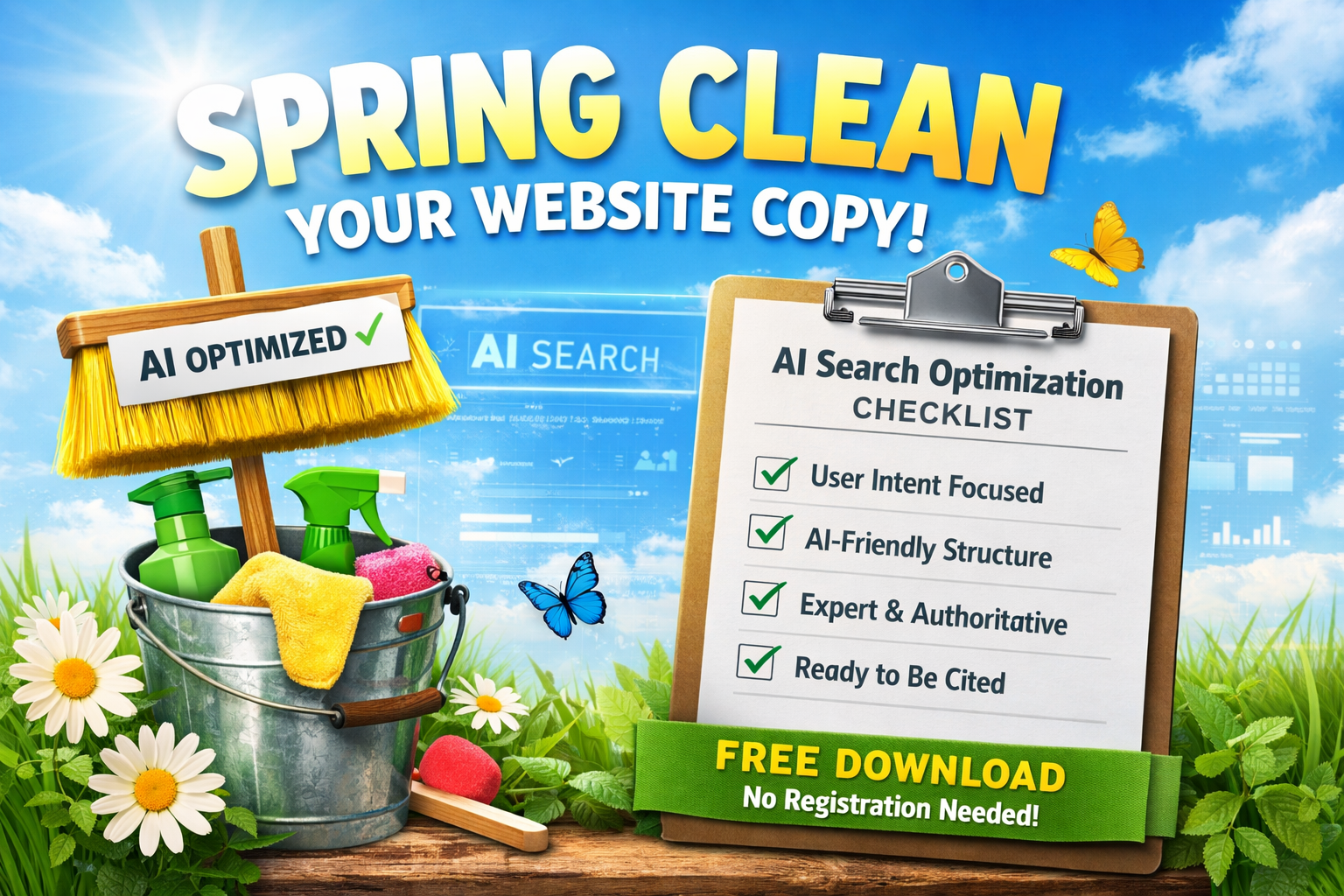
Spring clean AI

With AI, search has changed.

We are no longer optimizing only for blue links. With AI-driven search experiences like Google’s AI-generated summaries powered by Gemini, content is no longer just ranked — it is extracted, summarized, and cited.

If your content isn’t structured for AI visibility, you risk becoming invisible.

The Shift: From Ranking Pages to Training Answers

Traditional SEO focused on:

  • Keyword density
  • Backlinks
  • Metadata
  • Technical optimization

Those still matter.

But AI search now prioritizes:

  • Clear intent matching
  • Structured, extractable content
  • Semantic depth
  • Authority and verifiable signals

AI systems don’t just “rank” your page. They:

  • Scan it
  • Extract structured insights
  • Summarize key passages
  • Decide whether to cite it as a source

That changes how we write.


What AI-Optimized Copy Looks Like

1. Clear Intent Alignment

Answer the primary question early.
State the problem and solution directly.

2. Structured Formatting

AI prefers:

  • Headings (H2, H3)
  • Bullet lists
  • Short paragraphs
  • FAQ blocks

Structure increases extractability.

3. Semantic Coverage

Don’t just mention a keyword.
Cover the topic comprehensively:

  • Define terms
  • Add related subtopics
  • Include comparisons
  • Provide step-by-step breakdowns

4. Authority Signals

AI systems are more likely to cite:

  • Original data
  • Expert insights
  • Clear examples
  • Transparent sourcing

Generic content gets ignored.


The New SEO Formula

Clarity + Structure + Authority + Intent Alignment = AI Visibility

That’s why we created a practical one-page checklist you can use before publishing any piece of content.

Download the free AI Search Optimization Check Sheet above and apply it to your next page.

The brands that adapt their content strategy now will dominate AI-powered discovery in the next 3–5 years.

Five ABM Quick Wins for Hospitality Teams

Account Based Marketing is firmly established in hospitality, especially for targeting corporate travel managers, event planners, and procurement teams. Yet many ABM initiatives fail to deliver early results.

The reason is rarely strategy. It is usually tool overload, weak CRM integration, and the absence of a fast proof point for sales.

This article focuses on a technology driven ABM quick win using AI assisted tools, with a clear five step execution framework and guidance on choosing the right platforms.

ABM Quick Wins for Hospitality
ABM Quick Wins for The Hospitality Industry

Start With One Clear OKR

ABM only works when it is anchored to a measurable objective.

Sample OKR for a hospitality SME or KMU
Objective: Increase qualified B2B opportunities
Key Result: Increase sales accepted leads from the top fifty target accounts by twenty percent within sixty days

Sample OKR for an enterprise hospitality brand
Objective: Improve ABM efficiency for corporate travel accounts
Key Result: Increase tier one account engagement by fifteen percent and pipeline velocity within one quarter

Once the OKR is defined, the tool selection becomes a tactical decision instead of a political one.


The Five Step ABM Quick Win Framework

Step 1 Evaluation

Identify accounts already showing buying intent. AI assisted intent data platforms dramatically reduce the time needed to spot low hanging fruit.

Focus on intent, not volume.

Step 2 Tool Implementation

Embed intent and account signals directly into the CRM. Salesforce or HubSpot should act as the system of action, not just the system of record.

Step 3 Sales Enablement

Train sales on priorities and actions. Tools only create value when sales knows exactly what to do with the signal.

Step 4 Trial Phase

Run a limited pilot with a small account set and a defined time window. This keeps execution fast and results credible.

Step 5 Measurement and Optimization

Use A B testing on messaging, timing, and channels. Optimize what works before expanding the program.


AI Assisted ABM Tools for Hospitality

Pros and Cons to Support Decision Making

Salesforce

Best suited for mid market and enterprise hospitality organizations

Pros
• Industry standard CRM with strong ecosystem
• Deep integration options for ABM and intent tools
• Strong reporting and pipeline visibility
• Scales well across regions and brands

Cons
• Requires disciplined configuration to avoid complexity
• ABM value depends heavily on connected tools
• Higher cost and admin effort for smaller teams

Best quick win use case
Use Salesforce as the execution layer where intent signals trigger tasks, alerts, and account prioritization for sales.


6sense

Best suited for enterprise and advanced ABM teams

Pros
• AI driven account intent and buying stage prediction
• Strong fit for complex buying committees
• Excellent for prioritizing high value accounts

Cons
• Higher price point
• Requires clean CRM data to perform well
• Longer onboarding compared to lighter tools

Best quick win use case
Identify in market hospitality accounts and push prioritized insights directly into Salesforce.


ZoomInfo

Best suited for SMEs and mid market teams

Pros
• Strong contact and company data coverage
• Intent signals are easy to activate
• Faster time to value than heavier ABM platforms

Cons
• Intent depth is lighter than specialized ABM tools
• Less predictive than AI first platforms

Best quick win use case
Enrich target accounts and give sales better context for outreach in early ABM pilots.


HubSpot

Best suited for SMEs and growing hospitality brands

Pros
• Easy to deploy and adopt
• Combines CRM, marketing automation, and reporting
• Strong usability for sales teams

Cons
• Less advanced ABM analytics
• Limited intent modeling compared to enterprise tools

Best quick win use case
Run lightweight ABM pilots where speed and adoption matter more than deep analytics.


How to Choose the Right Stack

A simple rule applies
Do not start with the most powerful tool
Start with the tool that creates action inside your CRM fastest

For many hospitality teams, Salesforce combined with one intent data source is enough to unlock the first ABM win.


Why This Technology Driven Approach Works

This framework minimizes risk, accelerates learning, and creates early proof of value. It aligns marketing, sales, and technology around one measurable outcome instead of a long term ABM roadmap.

In hospitality, ABM success is built step by step. The first quick win sets the foundation for scale.

The Anatomy of ChatGPT vs Claude: A Practitioner’s Comparison

Introduction

Most AI comparisons focus on benchmarks. This one focuses on behavior.
If you treat ChatGPT and Claude as different “organisms,” their strengths become obvious—and predictable.

The Anatomy of ChatGPT vs Claude

1. Cognitive Anatomy (How They Think)

  • ChatGPT: hierarchical reasoning, decomposition, execution-oriented
  • Claude: associative reasoning, context preservation, synthesis

Who wins when:

  • Logic, planning, workflows ? ChatGPT
  • Ethics, nuance, interpretation ? Claude

2. Linguistic Anatomy (How They Write)

  • Sentence rhythm
  • Tone control
  • Voice consistency

Include side-by-side writing samples (same prompt, different outputs).


3. Memory & Context (How Much They Can Hold)

  • Long PDFs
  • Policies, contracts, research papers
  • Loss of nuance vs compression

Claude tends to carry context; ChatGPT tends to optimize it.


4. Tooling & Ecosystem (What They Can Do)

  • Browsing
  • Data analysis
  • Images
  • Custom workflows

This is where ChatGPT clearly behaves like a platform, not just a model.


5. Reliability & Control (How Predictable They Are)

  • Prompt sensitivity
  • Output variance
  • Enterprise readiness

6. Use-Case Matrix (Very Shareable Section)

Use CaseWinner
Marketing copyChatGPT
Editorial writingClaude
Strategy decksChatGPT
Policy analysisClaude
AutomationChatGPT
Thinking through ambiguityClaude

Final Verdict: Choosing the Right Anatomy

They’re not competitors in practice—they’re complements.

  • ChatGPT is a multitool
  • Claude is a mind

The best teams learn when to use which.


4. Credibility Note

DIY Stencil ART – Dripping Paint Meets Street Art Attitude

Stencil art is one of the most powerful techniques to emerge from street art culture. With just a simple cut-out template and bold contrasts, you can create expressive imagery that feels both raw and intentional. Artists like Banksy popularized this style by combining simple silhouettes with strong emotional narratives—proof that less detail can sometimes say more.

In this DIY project, we combine stencil art with paint dripping to create a dramatic, layered effect. The example motif, Girl in the Rain, shows how a delicate silhouette can stand out against vibrant, flowing color.

Painted artwork, girl in the rain.
Painted artwork of the girl in the rain.

Why Stencil Art Works So Well

  • High contrast creates instant visual impact
  • Easy to reproduce and experiment with
  • Perfect for combining with other techniques (like dripping, splattering, or texture layers)
  • Great balance between control and randomness

This makes stencil art ideal for both beginners and experienced DIY creators.


Materials You’ll Need

  • Printed stencil design (on paper or cardstock)
  • Craft knife or precision cutter
  • Cutting mat
  • Canvas or thick paper
  • Acrylic paints (various colors)
  • Black acrylic paint or spray paint
  • Wide brush or sponge
  • Optional: spray bottle, gloves, drop cloth

Step-by-Step: From Stencil to Drip Art

1. Choose and Print Your Motif

Select a high-contrast image and convert it to black and white. Simplify details so the silhouette is clear. Print it at the size you want on sturdy paper.

Stencil of a girl in the rain

2. Cut the Stencil

Place the printout on a cutting mat and carefully cut out the black areas with a craft knife. Take your time—clean edges make a big difference.

Tip: Reinforce thin bridges with small tape strips on the back if necessary.


3. Position the Stencil on the Canvas

Place the stencil where you want the motif to appear. Secure it lightly with tape or hold it flat so paint doesn’t bleed underneath.


4. Create the Silhouette

Using black acrylic paint (or spray paint), apply an even coat over the stencil. Use a sponge or stippling motion to avoid pushing paint under the edges.

Carefully remove the stencil and let the silhouette dry.


5. Mask the Silhouette

Once dry, place the same stencil back over the silhouette to protect it. This turns the stencil into a mask, keeping the figure clean while you work on the background.


6. Drip the Paint

Mix acrylic paint with a little water until it flows easily.

  • Load a brush or cup with paint
  • Start at the top edge of the canvas
  • Let gravity pull the paint downward

Use multiple colors and allow them to overlap. You can tilt the canvas slightly to guide the flow.


7. Reveal the Artwork

When the background is dry, gently remove the stencil mask. The black silhouette will stand sharply against the colorful drips.

Optionally seal with a clear varnish.


Creative Variations

  • Try metallic or neon drips
  • Use multiple stencils layered in one piece
  • Experiment with textured pastes under the drips
  • Reverse colors: light silhouette on dark background

Final Thoughts

Stencil art thrives on contrast—control versus chaos, sharp edges versus fluid movement. Combining a clean stencil motif with dripping paint creates a striking visual tension that feels both urban and expressive.

The Girl in the Rain sample shows how a simple figure can carry emotion when paired with energetic color. Whether you’re decorating your studio, experimenting with street-art aesthetics, or just looking for a new DIY challenge, this technique is a powerful addition to your creative toolbox.

Happy creating!