Formula Student Germany – Student Racing Competition

Formular students teamwork

Formula Student Germany (FSG) is one of the world’s most prestigious student engineering competitions, bringing together university teams from across the globe to design, build, and race their own formula-style race cars.

Formula Student Germany 2026 will take place from Tuesday, 11 August 2026 to Sunday, 16 August 2026 at the Hockenheimring in Germany

More than a motorsport event, Formula Student Germany is a comprehensive engineering and innovation challenge that tests technical excellence, creativity, and teamwork. Students compete with combustion, electric, and autonomous vehicles while showcasing their expertise in design, manufacturing, software development, and business strategy.

Each year, hundreds of teams gather to prove that they can create not just a fast car—but a complete, well-engineered product.


What Is Formula Student Germany?

Formula Student Germany is part of the international Formula Student series and is recognized as a benchmark for automotive and motorsport engineering education.

Teams are evaluated through a combination of:

  • Static Events: Engineering Design, Cost & Manufacturing, Business Presentation
  • Dynamic Events: Acceleration, Skidpad, Autocross, Endurance, and Efficiency

Success requires a balance of performance, reliability, innovation, and financial feasibility—just like in real-world engineering projects.


Why Formula Student Germany Is a Great Opportunity for Students

Hands-On Engineering Experience

Students transform theory into practice by designing components, running simulations, manufacturing parts, and validating performance through testing.

Multidisciplinary Teamwork

Mechanical, electrical, software, and business students collaborate in one integrated project—mirroring professional engineering environments.

Direct Industry Exposure

Leading automotive and technology companies attend Formula Student Germany to recruit talent, host workshops, and evaluate new ideas. Many participants secure internships or full-time roles through the competition.

Leadership & Project Management Skills

Students manage budgets, schedules, sponsorships, and risk—developing essential professional skills beyond technical knowledge.

Career Acceleration

Participation in Formula Student Germany is widely recognized by employers as proof of practical engineering competence and initiative.

Formular student Germany 2026

Why Formula Student Germany Matters for Technology & Innovation

Formula Student Germany serves as a testbed for future mobility technologies, including:

  • Electric and high-voltage powertrain systems
  • Autonomous driving software and sensor fusion
  • Lightweight materials and composite structures
  • Battery management systems and power electronics
  • Vehicle dynamics modeling and data-driven optimization

Many concepts first explored by student teams later appear in commercial automotive and motorsport applications.


A Launchpad for Future Engineers

For thousands of students, Formula Student Germany becomes a defining part of their education. It builds technical confidence, problem-solving ability, and professional networks that last well beyond university.

Whether your passion lies in automotive engineering, electric mobility, robotics, software development, or advanced manufacturing, Formula Student Germany provides an unmatched platform to grow, learn, and innovate.

Find out more on: https://www.formulastudent.de/

Agentic AI in Hotels: The Technology That Makes Hospitality More Human

Agentic AI in Hospitality Management
Agentic AI Frees Uo valuable one-to-one guest time!

The hotel industry has a paradox: the more we aim for personalization, the more we bury staff in administration.

Preferences are scattered. Guest context lives in multiple tools. Requests arrive through every channel. And the team—front office, reservations, housekeeping, F&B—spends valuable minutes collecting information instead of creating connection.

Agentic AI changes that. Not because it’s “smarter automation,” but because it introduces a new operating model: software that can take a goal (“prepare for this guest’s arrival”) and execute coordinated steps across your digital ecosystem—while keeping humans in control.

Done right, agentic AI doesn’t replace hospitality. It protects it.


What “agentic AI” actually means in a hotel context

Think of agentic AI as an orchestrator, not a single feature.

Instead of only answering questions, it can:

  • pull context (reservation, history, preferences, disruptions, spend patterns)
  • trigger actions (create tasks, update notes, route tickets, send messages, propose offers)
  • learn from outcomes (was the offer accepted? did the issue recur? what improves satisfaction?)

It’s the difference between:

  • “Here’s an answer.”
    and
  • “I handled it—and I documented it across the systems your team uses.”

The operational problem it solves: “information work”

Most friction in hotel operations is not “service work.” It’s information work:

  • hunting down guest details
  • re-typing the same information
  • answering repetitive questions
  • manually coordinating between departments
  • inconsistent handovers between shifts and properties

A global hotel-chain report (171 unique hotel chains) shows adoption is happening, but execution is fragmented: 78% use AI today, 89% plan more, yet only 8% have a formal, company-wide strategy.

That gap is your opportunity: the winners won’t be the hotels that “try AI.”
They’ll be the hotels that operationalize it.


Where the value shows up (with hard numbers)

1) Cost-to-serve drops without cutting service

McKinsey estimates that applying generative AI to customer care can increase productivity by ~30–45% of current function costs.

In hotel terms, that translates to:

  • fewer repetitive calls/messages reaching the front desk
  • faster resolution time
  • less night-shift pressure for routine questions
  • cleaner escalation to humans for complex or emotional cases

Case studies in hospitality also show large deflection potential (example: one hospitality chatbot case reports 72% of queries handled without agent assistance). Treat these as directional, not guaranteed—results depend on integration and content quality.

2) Personalization drives measurable revenue lift

McKinsey’s research on personalization shows it most often drives ~10–15% revenue lift (execution-dependent).

Hotels feel this lift through:

  • higher direct conversion
  • improved satisfaction (fewer “repeat explanations”)
  • more relevant add-ons (late checkout, breakfast, parking, spa, room category upgrades)

3) Upselling scales across the portfolio (not just with your best receptionist)

One of the most underappreciated benefits of agentic AI is portfolio consistency:

  • the same guest recognized across properties
  • the same preferences carried over
  • the same offer logic and brand standards applied

Hotel chains themselves signal this direction: in the h2c study, 54% plan AI-supported upselling and 49% plan personalized booking in the next 12–24 months.

And when conversational AI is paired with upsell tooling, some groups report very large conversion improvements (again: case-study results, not universal).


The real “plot twist”: AI increases human-to-human contact

When AI agents absorb the repetitive work, staff time shifts to what guests actually remember:

  • warm arrivals
  • proactive recovery
  • genuine recommendations
  • relationship-building that leads to loyalty

This is the message teams need to hear clearly:

Agentic AI is not a headcount strategy. It’s a hospitality strategy.

Because the experience improves precisely where humans are irreplaceable: empathy, judgment, presence.


How to operationalize agentic AI with your existing infrastructure

You don’t need to replace your entire stack. You need a thin orchestration layer plus strong governance.

Step 1: Pick “connected moments” across the guest journey

Start where information work is heavy and value is immediate:

  • pre-arrival questions + special requests
  • check-in coordination (ETA, room readiness)
  • in-stay requests (maintenance, housekeeping, amenities)
  • post-stay feedback + service recovery

Step 2: Integrate the minimum systems for a unified guest context

Typically:

  • PMS (reservation, stay history, room status)
  • CRM / loyalty (member status, preferences, lifecycle)
  • Guest messaging (WhatsApp/SMS/app chat/email routing)
  • Ops ticketing (maintenance/housekeeping tasks)
    Optionally later:
  • POS / spa / golf / outlets for richer personalization and upsell targeting

The h2c report flags data silos and incomplete integrations as core blockers to personalization—so treat integration as a value prerequisite, not an IT nice-to-have.

Step 3: Define guardrails (this is where trust is built)

  • consent + privacy rules (what can be used for personalization)
  • human-in-the-loop thresholds (when must the AI escalate)
  • brand voice + service recovery policies
  • logging (what actions were taken, by whom/what)

Step 4: Train staff like you’re introducing a new team member

The same study shows lack of AI expertise (62%) is a bigger barrier than the tech itself.

Training that works:

  • role-based playbooks (front office vs reservations vs housekeeping leaders)
  • escalation training (“what the AI handles, what I handle”)
  • quality loops: weekly review of misroutes, missed intents, bad offers
  • KPI literacy: staff should understand what “deflection,” “AHT,” “conversion,” and “guest sentiment” mean operationally

Step 5: Measure outcomes with a hotel-operator scoreboard

Minimum KPIs:

  • % of inquiries resolved without staff (“deflection”)
  • average response time (by channel)
  • ticket cycle time (maintenance/housekeeping)
  • upsell conversion and ancillary revenue per occupied room
  • loyalty metrics: repeat rate, member enrollment, direct share, NPS/comment sentiment

Notably, 42% of chains don’t track AI ROI at all—which is why pilots stall. Make measurement non-negotiable.


A simple recommendation for hotel leaders

If you take only one idea from this:

Deploy agentic AI to protect your team’s attention.
Attention is the scarce resource in hospitality.
Not data. Not tools. Not even time.

When staff are freed from collecting information, they can do what guests came for in the first place: be hosted by a human.

From Scribbles to Stardust: Creating Art Beyond Imagination with Hand-Drawn Sketches and ChatGPT

Dancing Flower created by ChatGPT based on the scribble

Art has always been a conversation between imagination and medium. For centuries, that conversation required mastery of brushes, pigments, and painstaking technique. Today, something extraordinary is happening: a simple hand-drawn sketch—rough, imperfect, even childlike—can become the seed for breathtaking, otherworldly artwork with the help of AI.

And that changes everything.


The Beauty of Imperfect Beginnings

Look at the most powerful ideas in art history, and you’ll notice a pattern: they rarely begin as polished masterpieces. They start as marks. Lines. Gestures. Doodles in the margins of notebooks.

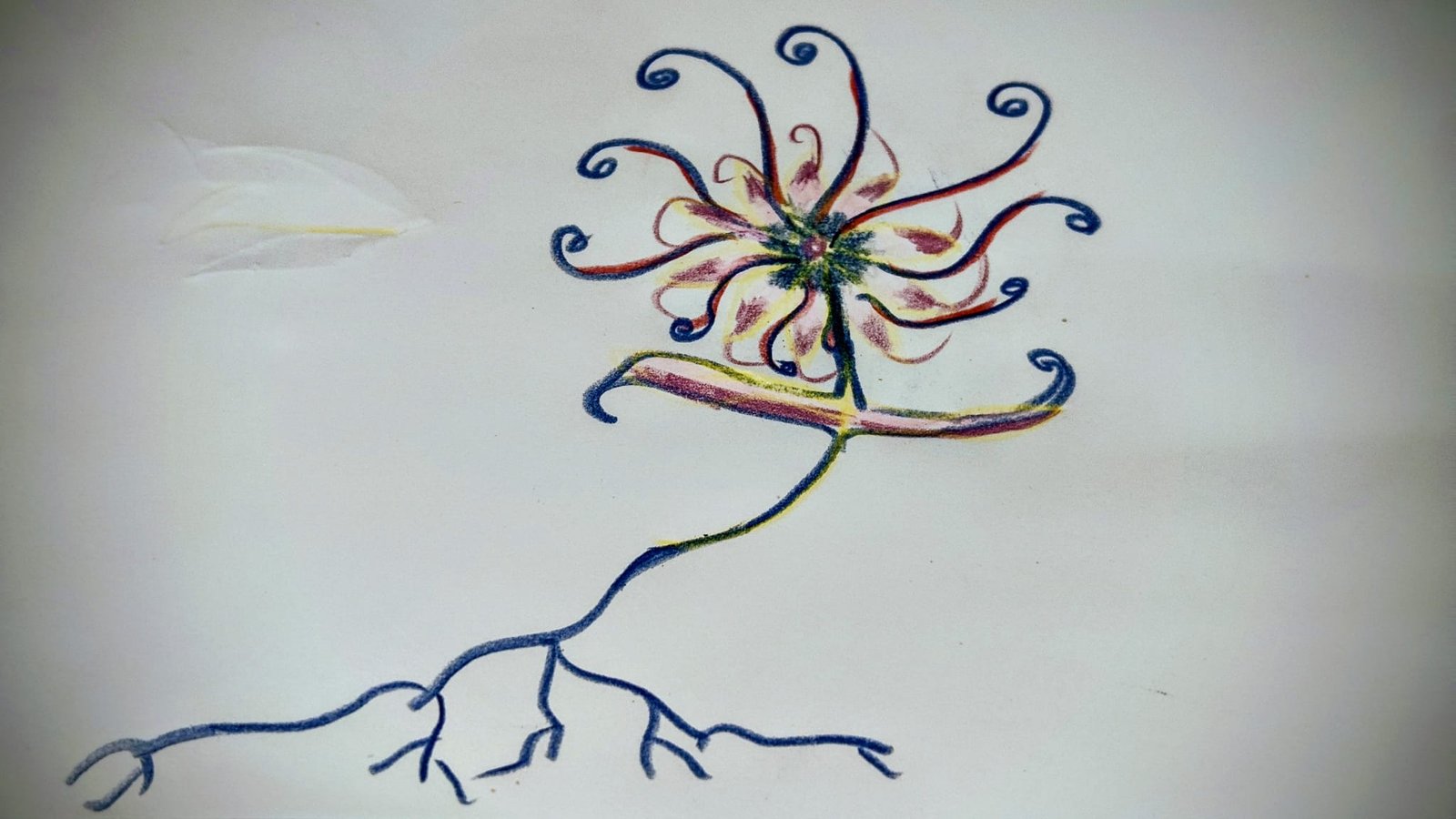
Original Flower Scribble

Those humble scribbles are not limitations—they are portals.

When you draw freely, without worrying about precision, you’re giving your subconscious permission to speak. A crooked stem, a looping petal, a strange curve that “doesn’t make sense” yet feels right—these become visual clues. They contain intention, emotion, and movement in their rawest form.

That’s where the magic begins.


Enter ChatGPT: Your Creative Amplifier

ChatGPT isn’t here to replace your creativity. It’s here to amplify it.

Think of it as a creative collaborator who:

  • Helps you describe your vision more clearly
  • Translates abstract feelings into vivid visual language
  • Suggests styles, moods, lighting, textures, and atmospheres
  • Pushes ideas beyond what you might initially imagine

You bring the spark. ChatGPT helps fan it into flame.

By combining your hand-drawn sketch with carefully crafted prompts, you can guide generative image tools toward results that feel intentional, personal, and deeply expressive.


The Workflow: Simple, Powerful, Accessible

You don’t need a studio. You don’t need expensive equipment. You don’t need years of training.

Here’s a beautifully simple process:

  1. Sketch Freely
    Draw something—anything. A strange flower. A dancing line. A shape that feels alive.
  2. Describe What You See
    Ask ChatGPT to help articulate the essence of your sketch.
    Example:
    “This looks like a whimsical flower with curling petals, glowing roots, and a sense of motion, as if it’s dancing in soft light.”
  3. Refine the Vision Together
    ChatGPT can suggest variations:
    • Dreamlike vs. photorealistic
    • Painterly vs. cinematic
    • Dark fantasy vs. luminous fairytale
  4. Generate and Iterate
    Feed the refined prompt into your preferred image generator. Adjust. Explore. Repeat.

Within minutes, a pencil doodle becomes a glowing, dimensional artwork that feels pulled from a dream.

1st Iteration of the scribble by ChatGPT

Why This Feels So Revolutionary

Because it collapses barriers.

  • You no longer need advanced technical drawing skills to express complex visual ideas.
  • You no longer need to “know how” before you begin.
  • You no longer have to translate imagination through a single narrow channel.

Instead, creativity becomes conversational.

You sketch.
You describe.
You explore.

Art becomes less about execution and more about vision.


A New Kind of Artist

This approach creates a new creative identity:

Not just painter.
Not just illustrator.
Not just designer.

But vision architect.

You design experiences, moods, and worlds.

Your role shifts from “Can I draw this?” to “What do I want to feel, see, and explore?”

That’s a profound change.


Collaboration, Not Automation

There’s a misconception that AI-generated art lacks soul.

The truth is the opposite.

When guided by a human with intention, curiosity, and emotion, AI becomes a lens—not a replacement. It reflects back what you feed into it.

Your sketch provides the gesture.
Your words provide the meaning.
ChatGPT helps shape the bridge between them.

The soul is still yours.


The Playground Has No Walls

You can create:

  • Alien botanicals that glow with inner light
  • Characters born from abstract shapes
  • Landscapes that feel half-memory, half-dream
  • Visual poetry that never existed before

All starting from a few imperfect lines.

That is extraordinary.


Final Thoughts

We are living in a moment where imagination is no longer constrained by technical barriers. If you can dream it—and sketch a hint of it—you can explore it.

So grab a pencil.
Make a mess.
Draw something strange.

Then open ChatGPT and start a conversation.

You might be surprised how far your scribbles can travel.

Creating a Mind Flayer with Aluminium Foil and a 3D Pen

3d Pen: Mind Flayer Front

A DIY Guide for Creature Sculpting Enthusiasts for all Stranger Things fans! The Mind Flayer!

If you love blending sculpture with emerging technology, few projects are as satisfying as creating a detailed creature using a 3D pen over a handmade armature. In this tutorial, we’ll walk through the process of building a Mind Flayer–inspired creature using aluminium foil for the internal structure and a 3D pen for the outer skin.

This hybrid technique combines traditional sculpting principles with the flexibility of 3D printing—perfect for hobbyists, prop makers, and fans of dark fantasy or sci-fi designs.

Mind Flayer: Side view

Why Use Aluminium Foil + 3D Pen?

Aluminium foil offers several advantages as an internal structure:

  • Lightweight and inexpensive
  • Easy to bend, twist, and reshape
  • Strong enough to support complex poses
  • Excellent heat tolerance for 3D pen plastic

Paired with a 3D pen, foil becomes the foundation for highly organic forms that would be difficult to model digitally.

Aluminium Body Mind Flayer

Materials & Tools

  • Aluminium foil (heavy-duty preferred)
  • 3D pen
  • PLA or ABS filament (black or dark brown recommended)
  • Needle-nose pliers
  • Craft knife or scissors
  • Heat-resistant work surface
  • Optional: acrylic paints, clear coat, fine sandpaper

Step 1: Designing the Creature

Before building, sketch or mentally map the creature:

  • Elongated body
  • Multiple legs or tendrils
  • Raised head or crest
  • Asymmetrical, unsettling silhouette

Think in terms of gesture first—the overall pose is more important than fine detail at this stage.


Step 2: Building the Aluminium Foil Armature

Tear strips of foil and twist them into thick cords. These become:

  • Spine
  • Legs
  • Arms/tentacles
  • Head structure

Join pieces by wrapping additional foil around the joints and compressing firmly.

Tip:
Work from the core outward. Create the torso first, then attach limbs, then smaller appendages.

At this stage, focus on:

  • Balance
  • Stability
  • Clear separation between limbs

The armature should stand on its own before moving forward.


Step 3: Refining the Shape

Once the basic skeleton is complete:

  • Add extra foil to bulk out muscles or body mass
  • Pinch and compress areas to sharpen angles
  • Smooth large surfaces by pressing with fingers or pliers

This step defines the creature’s anatomy and proportions.


Step 4: First 3D Pen Layer (Structural Skin)

Set the 3D pen to a moderate temperature suitable for your filament.

Begin coating the foil:

  • Start with thin lines
  • Trace along limbs and joints
  • Build a web of plastic rather than solid walls

This first layer acts as a shell, locking the foil in place.

Rotate the sculpture frequently to avoid sagging.

Work in Progress: 3d Pen Coating

Step 5: Thickening and Texturing

After the shell hardens:

  • Add additional layers to strengthen weak areas
  • Vary line thickness to create organic texture
  • Use short, broken strokes to simulate rough skin

For a Mind Flayer aesthetic:

  • Emphasize uneven surfaces
  • Add ridges and lumps
  • Create dangling tendrils beneath the head

Imperfection is your ally here.


Step 6: Defining Details

Use the 3D pen like a sculpting tool:

  • Draw sharp creases for joints
  • Add layered strands for tentacles
  • Build spikes, crests, or horn-like structures

If mistakes occur, let plastic cool, then trim with a craft knife.

Mind Flayer rear view

Step 7: Optional Finishing

If you want a more polished look:

  • Lightly sand rough areas
  • Apply acrylic paint (dry brushing works well)
  • Seal with matte or satin clear coat

Dark tones with subtle highlights enhance the creature’s depth.


Step 8: Display and Photography

Place the creature on a reflective or neutral surface. Strong directional lighting will cast dramatic shadows and emphasize its silhouette.

Consider photographing from low angles to enhance scale and menace.


Final Thoughts

This aluminium foil + 3D pen method opens up huge creative possibilities:

  • Custom monsters
  • Fantasy creatures
  • Sci-fi aliens
  • Stop-motion puppets

Each piece will be unique, and that’s part of the charm. The process encourages experimentation, improvisation, and hands-on problem solving.

If you’re looking to push your 3D pen beyond flat drawings and into true sculpture, this technique is a powerful place to start.

Happy building!

When Brad Pitt and Orlando Bloom Go Off-Road: Inside BMW’s Legendary Enduro Park

Brad Pitt and Orlando Bloom Enduro Offroad

Hollywood adventure does not always stop at the film set. Both Brad Pitt and Orlando Bloom have taken their passion for motorcycles seriously enough to train at the BMW Motorrad Enduro Park—a destination widely regarded as one of the world’s premier off-road riding facilities.

Located in Hechlingen, the park spans roughly 28 hectares of purpose-built terrain designed to replicate real-world adventure riding conditions. Riders encounter everything from steep ascents and technical descents to water crossings, sand sections, gravel beds, and narrow forest trails. The environment is demanding, yet carefully controlled, allowing riders to push their limits safely.

Training at the park is operated in cooperation with TWTMoto and delivered by certified BMW Motorrad instructors. Programs range from introductory off-road courses to advanced multi-day Enduro and adventure training, with a strong focus on balance, throttle control, body positioning, and confidence on unstable surfaces.

The presence of Pitt and Bloom underscores the park’s reputation. This is not a celebrity gimmick, but a serious training ground respected by professionals, enthusiasts, and instructors alike. Whether you are preparing for long-distance adventure travel or simply want to become a more capable rider off the tarmac, the BMW Motorrad Enduro Park offers an experience that is as authentic as it is unforgettable.

For riders who believe true adventure begins where the asphalt ends, this is where legends—on screen and on two wheels—come to learn.

https://www.twtmoto.com/bmw-motorrad-enduro-park

Let´s get dirty F GS 900
Let´s get dirty on the BMW F GS 900

Seeliebe Beach Club: Caribbean Vibes on Lake Constance

If you are searching for a place that feels like the Caribbean but is firmly rooted in Europe, Seeliebe Beach Club is a destination worth discovering. Located directly on the shores of Lake Constance, this beach club offers relaxed holiday energy, turquoise water views, and a lifestyle atmosphere that feels far removed from everyday life.

A Beach Club Experience — Without Leaving Germany

The Seeliebe Beach Club is known for its sandy beach area, stylish loungers, and open views across the lake toward the Alps. Palm details, comfortable seating, and curated music immediately create a summer mindset. On warm days, the light reflecting on the water gives the entire space a Mediterranean glow, making it easy to forget that you are still in southern Germany.

This is not a traditional lakeside café. It is a modern beach club designed for long afternoons, sunset drinks, and spontaneous moments that feel like vacation.

Food, Drinks, and Laid-Back Luxury

The menu focuses on light, fresh offerings that fit the beach club concept perfectly. Guests enjoy cold drinks, classic cocktails, Italian coffee, wine, and small dishes that are ideal for sharing. Everything is served with a sense of ease — no formality, no rush, just relaxed enjoyment by the water.

Whether you stop by for a daytime drink after swimming or settle in for the evening as the sun goes down, the atmosphere remains effortlessly stylish and welcoming.

A Favorite Spot for Locals and Travelers

The Seeliebe Beach Club attracts a diverse crowd: locals looking for a summer escape, couples enjoying a relaxed date, and travelers exploring the Lake Constance region. You do not need to be a hotel guest to visit, which makes it an easy and popular stop for day trips.

During peak summer days, arriving earlier is recommended, as the best spots fill up quickly when the weather is good.

Why It Belongs on Your Lake Constance Itinerary

What makes this place special is the combination of location and feeling. Few spots around Lake Constance manage to deliver such a strong “holiday abroad” sensation. The mix of sand, water, music, and scenery creates a beach club experience that rivals coastal destinations — without flights, crowds, or long travel times.

If you are curating a list of inspiring places, hidden gems, or lifestyle destinations, Seeliebe Beach Club stands out as a must-visit summer location.

Final Impression

Seeliebe Beach Club is proof that you do not need the Caribbean to feel like you are there. With its relaxed luxury, scenic lakeside setting, and unmistakable summer vibe, it captures the essence of a beach holiday in one of Germany’s most beautiful regions.

Perfect for slow afternoons, golden-hour drinks, and unforgettable summer memories — this is Lake Constance at its most stylish.

Find out more on: https://hotelseeliebe.de/beach-club/

What the Hottest 2026 Technologies Really Mean for B2C & B2B Marketers

The year 2026 marks a turning point: AI becomes autonomous, specialized, agentic, embedded into infrastructure, and tightly woven into daily business ecosystems. For marketers, this isn’t simply a tech evolution—it’s a strategic inflection point that reshapes how we understand audiences, orchestrate journeys, build value, and measure outcomes.

Below is what these emerging technologies really mean for B2C and B2B marketers—and how to start preparing right now.

Hot Tech Trends in 2026

1. Advanced AI & Agentic Systems

Autonomous agents, multi-agent systems, and domain-specific language models (DSLMs) will dominate 2026.

What this means for B2C Marketers

  • Hyper-personalized, autonomous consumer journeys
    AI agents will design, test, and optimize journeys without waiting for human prompts—adjusting offers, timing, and channels in real time.
  • Conversational commerce 2.0
    Consumers will interact with their own AI assistants who make recommendations, compare products, and negotiate offers.
    Marketers must optimize for an AI-first buyer, not just a human buyer.
  • Micro-segmentation at scale
    DSLMs understand consumer behavior at a depth never seen before: lifestyle, emotion, micro-intent, cultural nuance.

What this means for B2B Marketers

  • AI-driven account intelligence
    Multi-agent systems will score accounts dynamically—based on market signals, procurement changes, and internal activity.
  • Autonomous ABM campaigns
    Campaign agents will continuously orchestrate personalized content, outreach, and follow-ups for each buying role.
  • Radical efficiency in content production
    DSLMs trained on domain knowledge produce whitepapers, briefs, and case studies with near-expert precision.

2. Cybersecurity, Privacy & AI Governance

As AI scales, so do risks. Security becomes a brand trust pillar.

For B2C Marketers

  • Trust becomes a buying factor
    Consumers reward brands that clearly explain data usage, AI agents, and privacy protections.
  • Ethical design differentiates brands
    Transparent personalization and opt-in autonomy will become competitive advantages.

For B2B Marketers

  • Security storytelling moves to the forefront
    Procurement requires AI risk assessments, model governance documentation, and compliance clarity.
  • Secure data ecosystems enable deeper personalization
    Strong governance unlocks higher-quality, compliant data—driving more effective targeting.

3. AI-Native Platforms, Cloud Infrastructure & IoT Integration

For B2C Marketers

  • Real-time contextual marketing becomes the norm
    From smart homes to wearables, IoT-linked AI will trigger experiences at the perfect moment—when intent is highest.
  • Frictionless omnichannel experiences
    Cloud-AI convergence means every customer touchpoint receives the same intelligence instantly.

For B2B Marketers

  • AI-native Martech stacks reshape operations
    Tools that build, integrate, and optimize themselves reduce operational overhead dramatically.
  • Predictive buyer behavior from IoT data
    Industrial IoT + AI gives real-time insights into equipment status, usage patterns, and future needs—turning marketers into forecasters.

4. Emerging Frontiers: Quantum, Bioprinting & BCI

These technologies may feel distant—but their marketing implications have already begun.

For B2C Marketers

  • Quantum-enabled personalization
    Ultra-fast simulations will refine recommendations and pricing models at unmatched speed.
  • New product categories
    Bioprinted health products or BCI-driven interfaces will require new education-first marketing formats.

For B2B Marketers

  • Entirely new verticals emerge
    Quantum computing and bioprinting reshape industries—creating new target accounts and value propositions.
  • Technical content becomes king
    Buyers will demand clarity on complex innovations. DSLMs can generate expert-level content for niche audiences.

5. Consumer & Automation Tech: Robots, Drones & Smart Cars

For B2C Marketers

  • New touchpoints in the physical world
    Domestic robots or smart cars become marketing channels:
    • in-car recommendations
    • home robot notifications
    • drone-enabled deliveries and experiences
  • Shift from screen-based to ambient marketing
    The home becomes a responsive environment, not a channel.

For B2B Marketers

  • New data streams from automated systems
    Robots and drones offer insights into behavior, operations, and demand.
  • Partnership-driven ecosystems
    Smart device ecosystems open new B2B collaborations and co-branding opportunities.

What Marketers Must Do Now

For Both B2C & B2B Leaders:

  1. Build AI governance capabilities.
  2. Prepare for AI-first customers and buying committees.
  3. Invest in data quality, interoperability & ethical frameworks.
  4. Experiment with autonomous agents in controlled environments.
  5. Shift teams toward creativity, strategy & human-centric design.

The Bottom Line

2026 is not about more AI—it’s about AI becoming independent, specialized, and deeply embedded.
Marketers who master governance, orchestration, collaboration with agents, and ethical innovation will dominate the next decade.

Ceci n’est pas une mandarine — The Hidden Beauty of Nature’s Quiet Illusions

Ceci n´est pas une mandarine

here are moments in nature so small and unassuming that they often slip past us unnoticed. A leaf trembling in a soft breeze. A bird sketching effortless curves across the morning sky. Or, as captured here, a humble piece of fruit revealing an unexpected universe of patterns, colors, and quiet poetry.

This is where nature hides her brilliance—in the places we dismiss as ordinary.


A Fruit, or a Tiny Sun?

At first glance, the object seems obvious: a peeled mandarin, familiar and comforting. But seen from above, it transforms into something entirely different.

A miniature sun.
A soft sculpture of repeating crescents.
A natural mandala formed not by human hands, but by time, light, and quiet biological geometry.

Nature has a way of rearranging the everyday into something symbolic—sometimes even sacred—when we pause long enough to truly look.


Why “Ceci n’est pas une mandarine” Matters

The phrase playfully echoes Magritte’s famous challenge to perception, reminding us that things often hold more meaning than their surface suggests.
This is not just a mandarin.
It is an invitation.

To notice.
To imagine.
To reconsider what stands before us.

When we look twice:

  • A fruit becomes a landscape
  • A shadow becomes a story
  • A simple moment becomes a lingering mood

This shift in perception is the heart of nature-inspired mindfulness—an art of noticing that opens our senses to quiet wonder.


Patterns, Patience, and the Beauty of Presence

The symmetry of the segments, the saturated orange glow, the soft textures catching faint light—all combine into a visual experience far richer than the object itself.

Nature doesn’t demand grand gestures.
She asks only for:

  • Presence
  • Attention
  • Curiosity

When we offer these, even briefly, the world becomes textured again. Colors feel fuller. Time stretches. The ordinary becomes extraordinary.

These are the impressions that linger long after the moment passes.


Rediscovering Wonder in the Everyday

The mandarin—or not-mandarin—becomes a quiet reminder:

Beauty doesn’t hide from us.
We simply forget how to look.

In its simplicity, this little sun-shaped fruit invites us to pause:

Breathe.
Observe.
Let nature reveal her subtle art.

Because the real magic of the natural world isn’t only in mountains, oceans, or dramatic sunsets.
It is in the small, uncelebrated spaces where meaning lives quietly, waiting for us to notice.


Conclusion: This Is Not a Mandarin. It Is a Moment.

What we see is never the whole story.
And often, the most powerful impressions come from the gentlest scenes.

So no, this is not a mandarin.
It is a lesson in perspective—an ode to the unnoticed—and a tiny reminder that wonder lives closer than we think.

DIY Woodworking for Kids: Making a Maui Hook Replica

A simple layered plywood project that looks amazing

Woodworking with kids doesn’t have to be complicated. In fact, some of the most impressive-looking results come from very simple methods. One of our favorite projects is this handmade replica of the iconic Maui hook from Moana — a fun, hands-on build that introduces children to basic woodworking techniques while giving them a fantastic prop or decoration they’ll be proud of.

What’s especially great about this project is that it’s made from layered plywood, shaped with simple tools, and finished with details that kids can help create step by step.

Vajana Moana hook replica wood work

What You’ll Need

  • Plywood sheets
  • Wood glue
  • A jigsaw, coping saw, or scroll saw
  • Sandpaper (coarse to fine)
  • A woodburning tool
  • Clear coat or varnish
  • Rope or thick twine for the handle wrap

How to Make the Maui Hook

1. Create the Shape Using Layers

Start by tracing the hook shape onto several pieces of plywood. Kids can help draw the outline or hold the layers in place. Glue the sheets together to build thickness. Once dry, you’ll have a sturdy block ready to cut.

2. Cut Out the Outline

Using a saw, carefully cut along the shape. This step is best handled by an adult, but kids can watch and learn how the lines become a real object.

3. Sand Smooth and Round

Kids especially enjoy this part. Use coarse sandpaper to shape the hook, then finer grit to create a smooth, rounded surface. The transformation from rough wood to a polished curve is incredibly satisfying.

4. Add Woodburned Designs

A woodburning tool is a fantastic way to add details. Kids can help sketch patterns in pencil first, and adults can burn them into the surface. Polynesian-inspired lines and swirls give it the authentic Maui look.

5. Clear Coat for Protection

A few layers of clear coat bring out the grain, protect the pattern, and give the hook a finished shine.

6. Wrap the Handle

Finally, wrap the bottom of the handle tightly with rope or twine. This not only looks great but also makes the hook easier to hold.


Why This Project Works So Well for Kids

Woodworking projects like this teach children to plan, shape, and finish a real object. They get hands-on time with sanding, drawing designs, and helping with assembly — all while seeing a flat piece of wood turn into something recognizable and exciting.

The Maui hook is perfect because it’s bold, iconic, and instantly rewarding to make. Kids love the end result, whether for display, costume play, or simply as a keepsake they helped create.

Grab some plywood, sketch out your hook, and dive in.
Yes, you and your kids can make this!

DIY 3D Pen Fun: Making Little Figures and Monsters

3d pen printed little monster B

Imperfect, quirky, creative — and totally doable

If you’re looking for a project that’s fun for all ages, full of personality, and doesn’t require precision or special skills, making little figures and monsters with a 3D pen is the perfect place to start. These creations can be cute, creepy, abstract, or downright bizarre — and that’s exactly what makes them so enjoyable.

The figure in the photo is a great example: a wiry, expressive little monster built entirely by layering simple lines of filament. It looks complex, but the process is surprisingly easy once you get the hang of it.

3d pen printed little monster A
3d pen printed little monster backside

What You Need

  • A 3D pen
  • Filament in a few colors
  • Paper or a heat-safe surface
  • Optional: a simple sketch to follow
  • Optional: glow-in-the-dark filament or paint

How to Make Your Own Little Monster

1. Start With a Simple Skeleton

Begin by drawing the rough outline of your figure directly onto paper. One vertical line for the spine, a circle for the head, a triangle for the torso, and simple lines for arms and legs.
Once the basic shape is drawn, trace over it with filament to make a flat “wireframe.”

2. Build It Up in Layers

Carefully lift the flat shape off the paper and begin “drawing” in mid-air. Add more lines of filament around the outline to give it structure. The beauty of this step is that the lines don’t have to be perfect — the loose, webby texture gives your figure character.

3. Shape the Head

Heads are one of the easiest parts. Start by making a loop or circle, then slowly thicken it by weaving filament back and forth. Add pointed ears, horns, big eyes — whatever fuels your monster ideas.

4. Add Color and Personality

Use contrasting filament colors to fill in certain areas, like the eyes, chest, or hands. Glowing filament or glow paint creates an otherworldly effect, especially on alien-style figures.

5. Feet and Base

For more stability, make the feet slightly wider or add a small flat base. Monsters with oversized feet stand especially well.

6. Final Touches

Add texture by doodling extra lines over the limbs. Create claws, spikes, or even tiny accessories. Kids especially love designing ridiculous features — giant hands, long necks, funny hair, or superpowers.


Why These Projects Are Great

Making monsters and little characters is incredibly freeing. There’s no “right” way for a monster to look. No symmetry required. No need to hide imperfections.
The more irregular the shapes, the more personality your creation has.

It’s a playful, low-pressure project that sparks imagination and encourages experimentation. And once you’ve made one creature, you’ll want to build a whole family of them.

Just grab a 3D pen, pick a color, and start doodling in 3D.
You can absolutely make your own monsters — yes, you can do it!